
Laser Pigmentation Reduction in Southampton
Target unwanted sunspots, age spots and post-inflammatory hyperpigmentation with medical-grade laser protocols, delivered by experienced practitioners in our Southampton clinic.
Patch test required. Not suitable for tanned skin. Strict SPF use is mandatory.
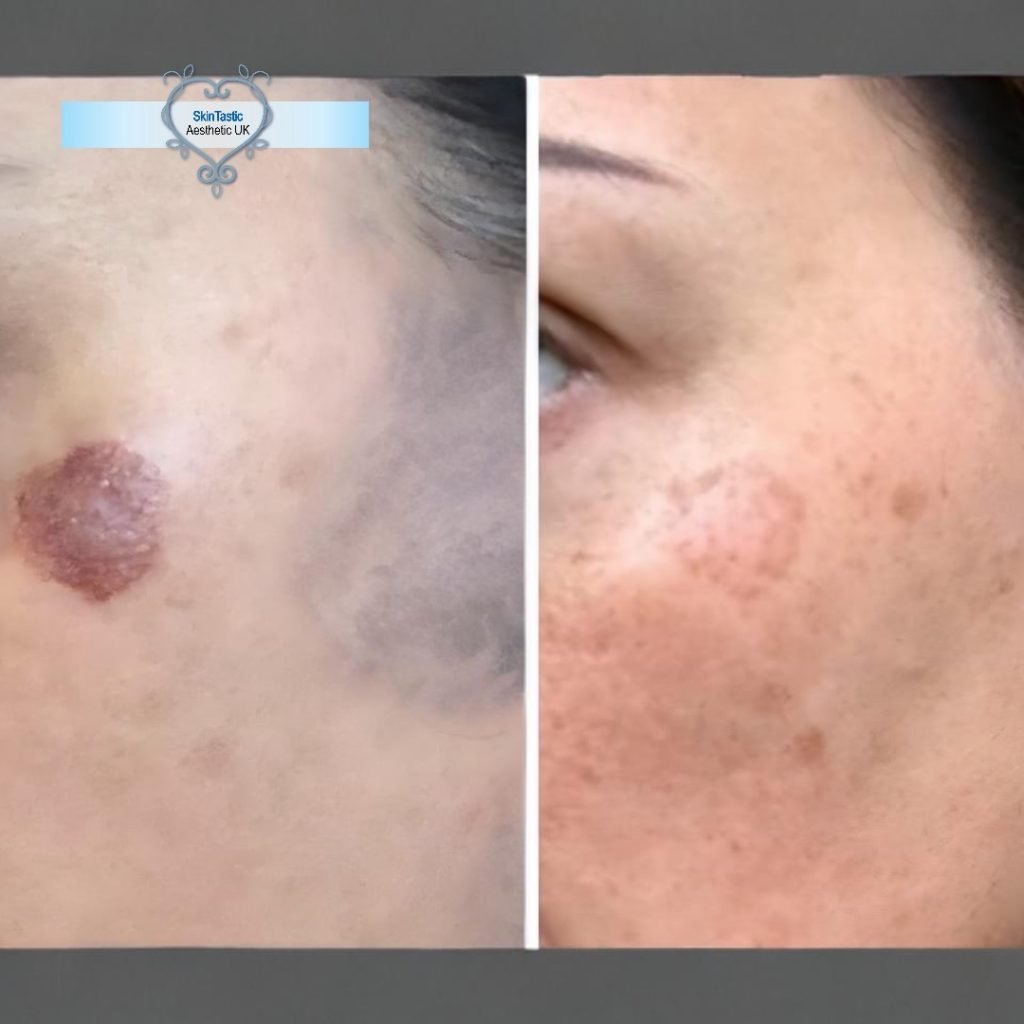
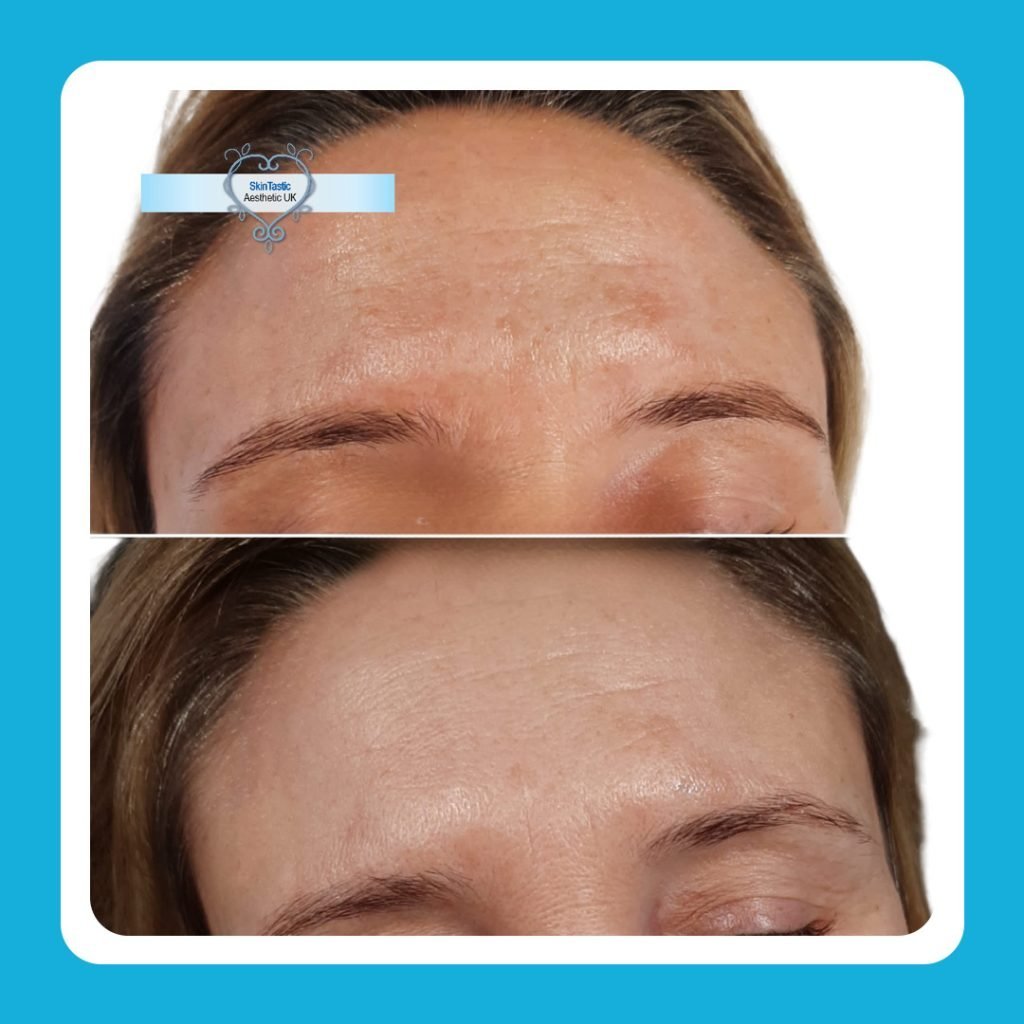
How Laser Pigmentation Reduction Works
We utilise appropriate wavelengths (including 532 nm for superficial epidermal lesions and 1064 nm for deeper dermal pigment) to selectively target melanin while preserving surrounding skin. Short pulses fragment pigment so it can be naturally cleared by the body. Protocols and parameters are tailored to skin type, lesion depth and area.
- Solar lentigines (sun spots), age spots
- Freckling clusters
- Post-inflammatory hyperpigmentation (PIH)*
- Some forms of uneven tone and textural dullness
What to Expect
- Consultation & Patch Test: Fitzpatrick typing, medical history, lesion mapping and test shots.
- During Treatment: Mild warmth or tingling; transient whitening or darkening of the treated spot is common.
- After Treatment: Pigment typically darkens then micro-crusts and flakes over 7–14 days. Multiple sessions are usually required.
Treatment Plan & Results
- Sessions: Usually 2–4 sessions per area, spaced 4–6 weeks apart.
- Downtime: 30-minute appointments with no downtime ideal for busy schedules.Low; most clients resume normal activity immediately.
- Maintenance: SPF 50+ daily; top-ups may be advised for sun-exposed areas.
Why Choose Skintastic
- Experienced Laser Practitioners (15+ years)
- Medical-grade devices with evidence-led protocols and audit trails.
- Safety First: Patch testing, parameter titration, and cooling strategies to support comfort.
- Integrated Care: Pre-treatment priming advice and structured aftercare to optimise outcomes.
Indications & Suitability
Fitzpatrick I–IV (case-by-case for V; not suitable for VI on 532 nm). Best for discrete sunspots, freckles, and certain PIH patterns.
Caution / Not treated: Melasma (laser can worsen in some cases), active eczema/psoriasis on area, pregnancy, photosensitising medications, recent tanning or self-tan, active infection, keloid tendency (clinical discretion).
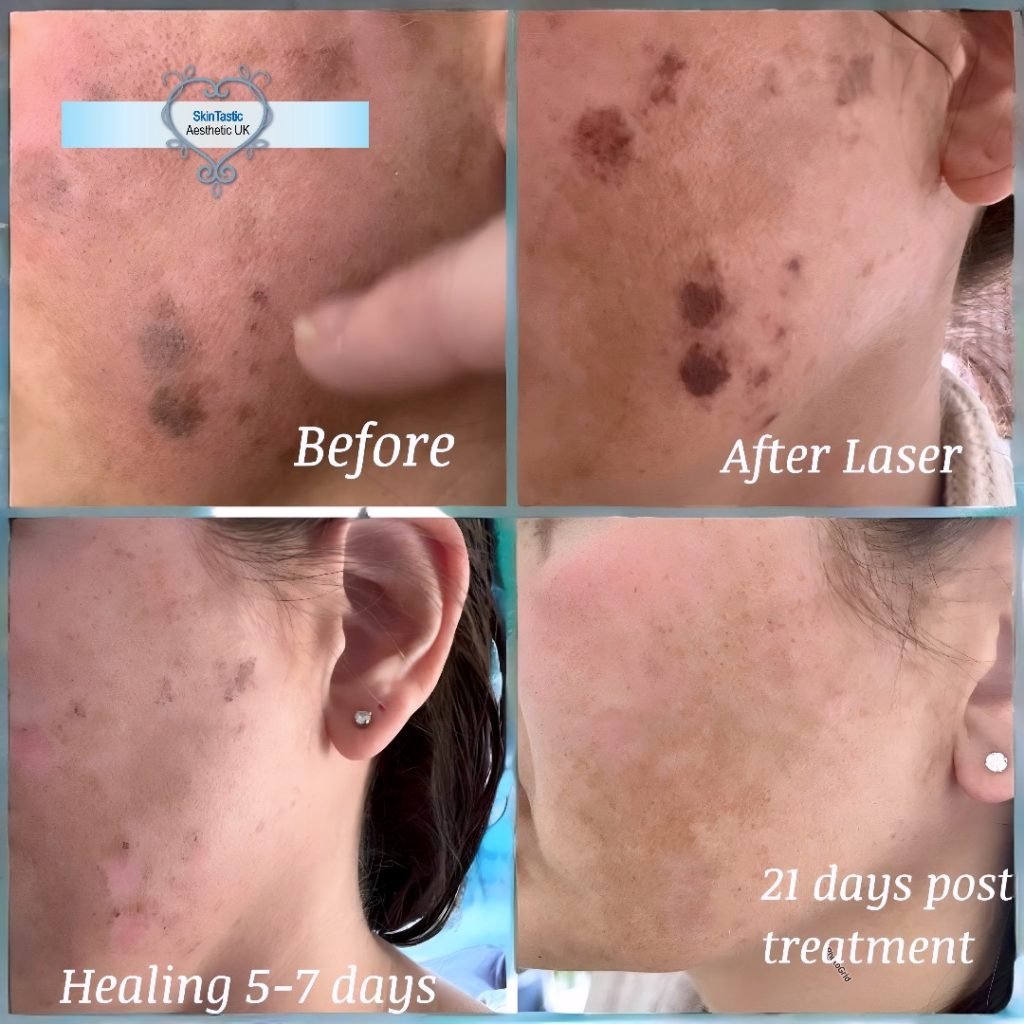
Treatment guidance
Pre-Treatment Guidance
- Avoid sunbeds, sun exposure and self-tan for 4 weeks.
- Discontinue retinoids/AHAs on the area for 5–7 days (unless clinician advises otherwise).
- SPF 50+ daily for 4 weeks pre-treatment.
- No waxing/epilating on the area for 2 weeks.
- Avoid bleaching or using hair removal creams on the area for 2 weeks.
Aftercare (Key Points)
- Keep the area clean and dry for 24 hours; avoid hot tubs/saunas for 48 hours.
- Do not pick or scrub darkened spots as they crust.
- Apply a gentle, non-active moisturiser as advised.
- SPF 50+ every day; avoid direct sun for 4 weeks.
- Pause retinoids/acids for 5–7 days post-treatment or until skin normalises.
Pricing
| Plan | Price | |
|---|---|---|
| Single lesion (small) | £75 | |
| Cluster/patch | £125 | |
| Full-face sun spots | £175 | |
| Course pricings | save upto 15% | |
| Final pricing confirmed at consultation following lesion assessment. | ||
frequently asked questions
Most clients notice visible lightening after 1–2 sessions. Full results develop as crusts shed over 7–14 days, with further blending over 2–4 weeks.
Discomfort is usually mild and brief (snapping/heat). Cooling methods are used to support comfort.
Cleared spots can re-appear with UV exposure. Daily SPF 50+ and sun-safe behaviour are critical. Maintenance may be recommended for high-exposure areas.
Typically 2–4. Factors include lesion depth, location, skin type and lifestyle (sun exposure).
