
Medical Nd:YAG Laser Tattoo Removal Safe & Effective in Southampton
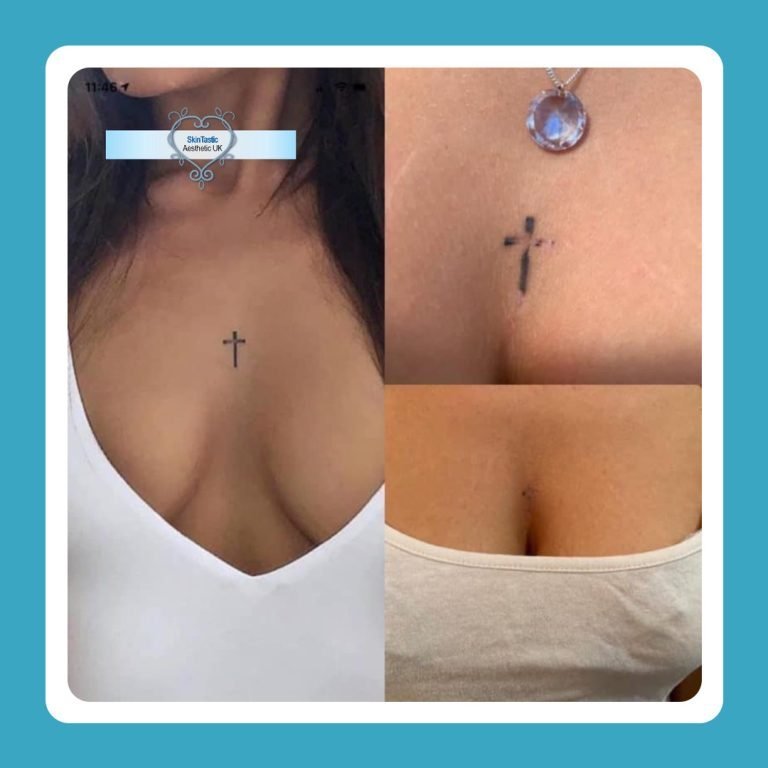
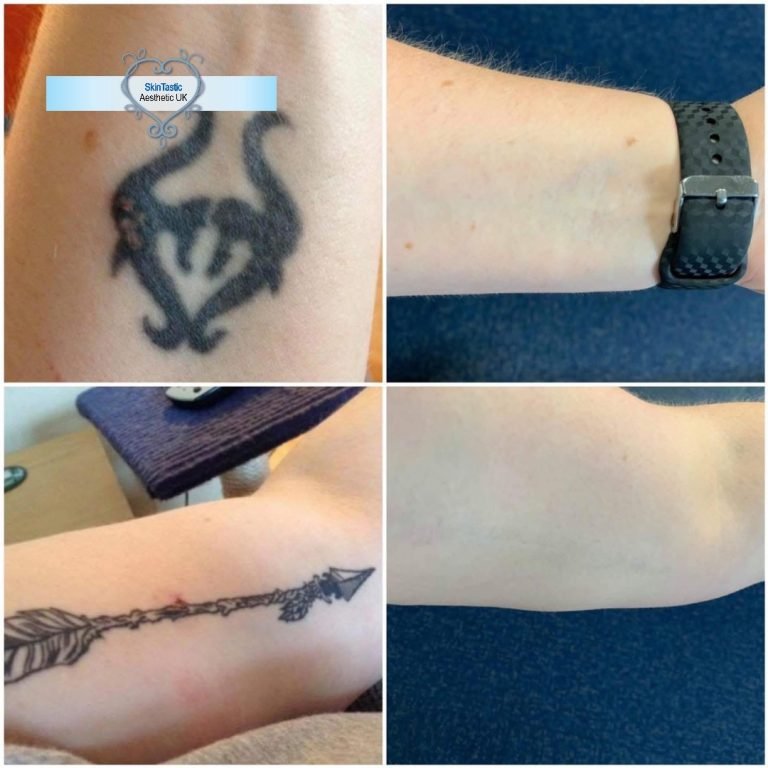
At Skintastic Aesthetics, we provide professional medical Nd:YAG laser tattoo removal in Southampton, offering a safe and effective solution for unwanted tattoos. Our advanced technology targets black, blue, and red inks with precision, helping to fade and remove tattoos over a course of treatments. Unlike salon grade devices, our MHRA-registered medical laser is designed for clinical reliability, ensuring results you can trust.
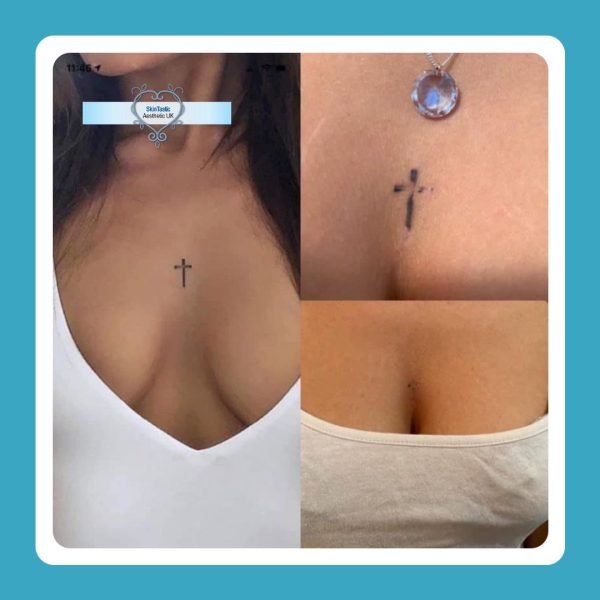
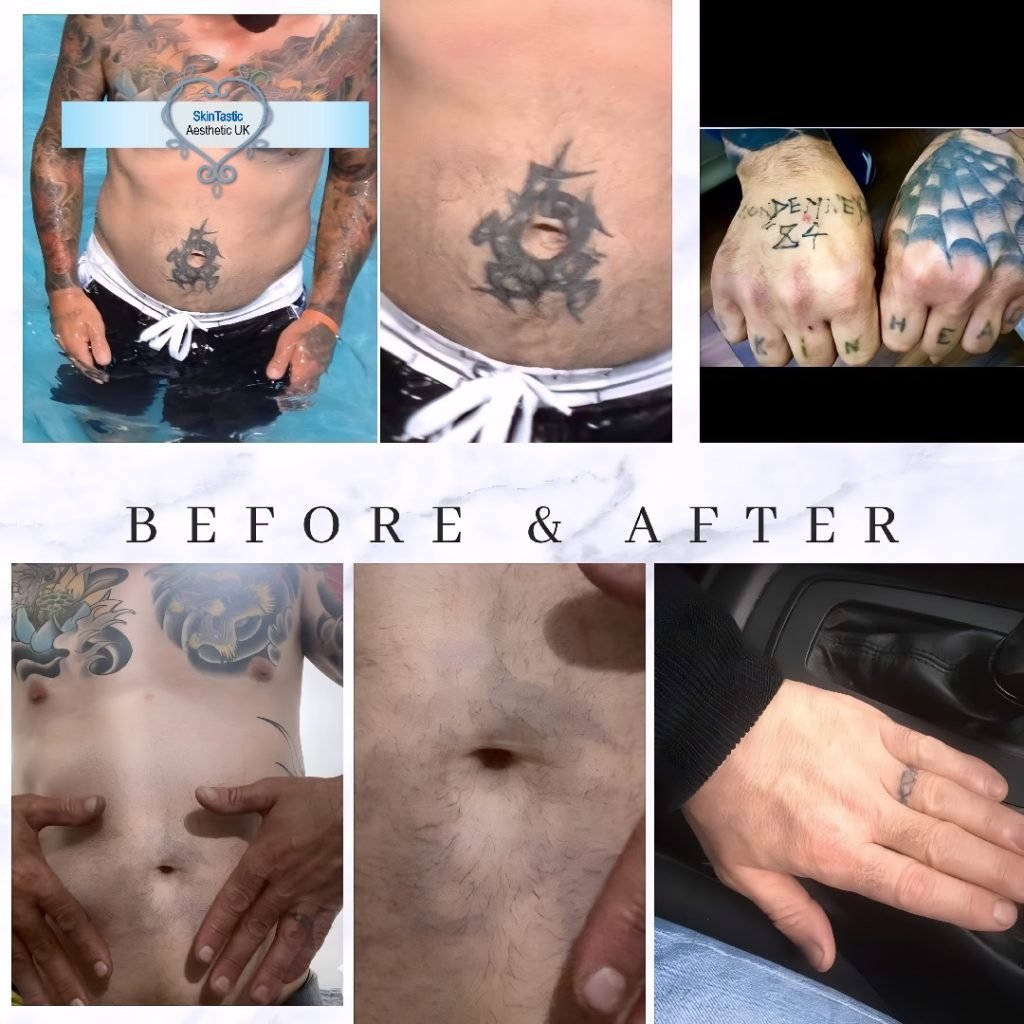
Our Promise in Tattoo Removal
- Specialist knowledge and experience– Our trained practitioners use advanced laser technology designed to safely and effectively fade or remove tattoos of all sizes and colours.
- Personalised treatment plans– Every tattoo and every skin type is different. We tailor each course of treatment to your individual needs, ensuring the best possible results.
- Safe and regulated care– Your safety is our top priority. We follow strict medical and safety standards to make every session as safe and comfortable as possible.
- Confidence in your results– With hundreds of successful tattoo removals, we’re proud to have helped clients regain confidence in their skin.
- Lifestyle-friendly: Complements a balanced diet and regular exercise for sustainable results.
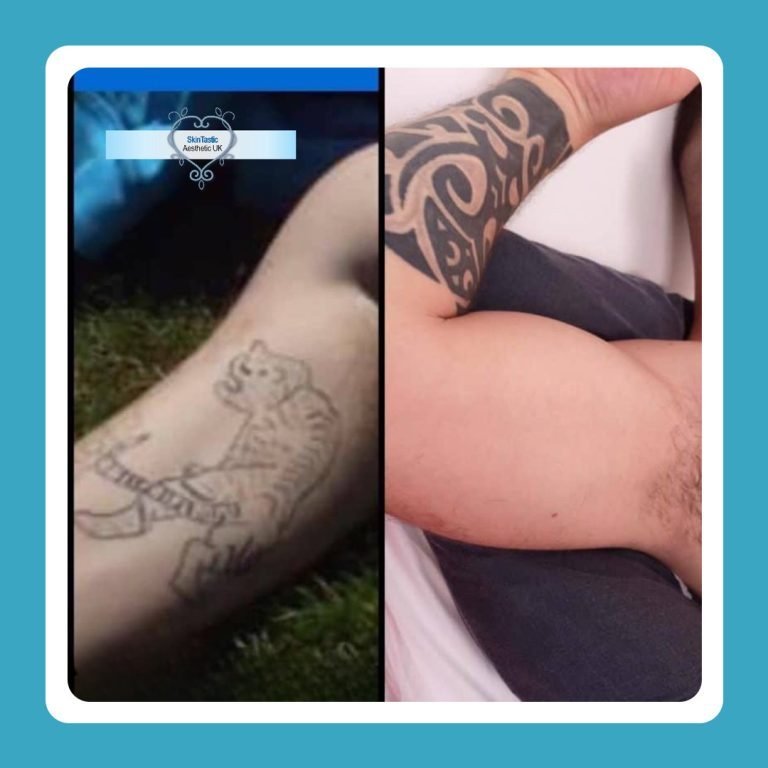
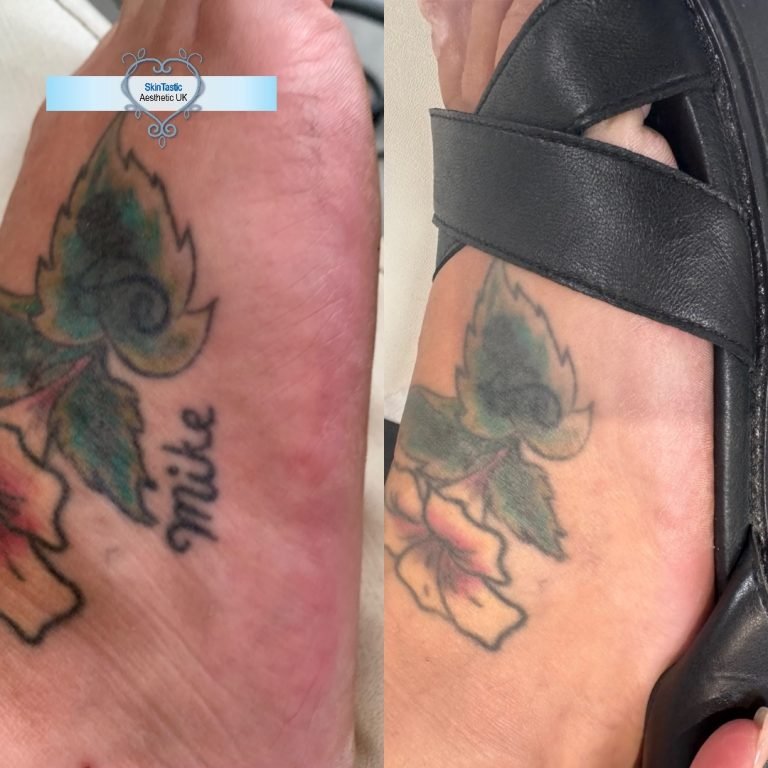
See the Transformation
See how our treatments gently shape your body, bringing out curves you’ll love and confidence that truly lasts
Pricing
| Treatment Name | Duration | Price |
|---|---|---|
| Consultation and Patch Test | 30 mins | £10.00 |
| Tattoo Removal (Small, 2cm x 2cm) | 30 mins | £30.00 |
| Tattoo Removal (Medium, 7cm x 7cm) | 45 mins | £75.00 |
| Tattoo Removal (Large, up to 15cm) | 1 hour | £125.00 |
| Consultation and Patch Test SPMU Removal Eyebrows and Lips (Excluding eyeliner) | 30 mins | £10.00 |
| SPMU Removal Eyebrows and Lips (Excluding eyeliner) Full treatment | 45 mins | £75.00 |
frequently asked questions
No. When using the q-switched Nd:Yag laser and following the “aftercare instructions” provided, there is minimal to no scarring, from this procedure. However, in rare cases, those with scarring disorders, such as keloids, have an increased risk of forming a scar.
The laser emits a pulse of light that is preferentially absorbed into certain colours of ink. The light enters the skin at a speed that is too fast to heat the tissues (billionths of a second), instead, it produces a shock wave effect and breaks up the ink particles into smaller pieces, the body then recognises these particles as something that shouldn’t be there and attacks it. The particles are then removed naturally via the body’s own elimination system.
If you are thinking about laser tattoo removal, your most burning questions may be “Does it hurt ?” and “How much does it hurt ?”. Tattoo removal causes a certain amount of physical pain and irritation to the area being treated but it is not the same for everyone.
Laser tattoo removal has been likened by some clients to the feeling of having a rubber band snapped on your skin. Others describe it as a rapid succession of pricks. While some say it feels like someone scratching sunburn. Tattoo removal treatments on areas with more fat like the arms and buttocks are generally not as painful as areas where there is less fat or close to a bone like the neck, ankle or finger.
In order to achieve safe and effective results, all clients must adhere to the following pre-treatment guidelines before undergoing laser tattoo removal:
Medical & Health Considerations
• Complete a full medical consultation and disclose any health conditions, medications, or skin disorders.
• Treatment cannot be carried out if you are pregnant, breastfeeding, undergoing cancer treatment, or suffering from active infections or compromised immunity.
• Avoid treatment if you are taking photosensitising medications (e.g. certain antibiotics, acne medications, or herbal remedies such as St John’s Wort). A GP letter may be required in some cases.
• A patch test must be performed at least 48 hours prior to your first session.
Skin Preparation
• The treatment area must be free from fake tan, natural tanning, sunburn, or sunbed exposure for at least 4 weeks prior.
• Do not apply creams, oils, deodorants, or makeup on the day of treatment.
• Shave the area 24 hours before your appointment if the tattoo is located in a hairy region.
• Avoid waxing, threading, epilating, or bleaching the treatment area for at least 2 weeks before.
Lifestyle & Safety Requirements
• Alcohol and recreational drugs should be avoided for 24 hours prior to treatment.
• Avoid aspirin, ibuprofen, or blood-thinning medications for 48 hours before unless prescribed by your GP (written confirmation may be required).
• Keep the area clean and protected; do not pick, scratch, or irritate the tattoo prior to treatment.
Expectations
• Be aware that multiple sessions (usually 6–12+) are required for optimal results.
• Some colours (green, yellow, aqua, fluorescent tones) may not respond effectively to removal.
• Mild redness, swelling, or pinpoint bleeding may occur post-treatment this is a normal reaction.
Laser tattoo removal initiates a healing response within the skin. Following the correct aftercare is essential to minimise risks, promote recovery, and achieve the best possible results.
Immediately After Treatment
• Expect redness, swelling, heat, and possible pinpoint bleeding or blistering. This is normal.
• Apply a cool compress to reduce discomfort and inflammation.
• A sterile, non-stick dressing may be applied if blistering occurs. Do not use occlusive plasters or tight bandages.
Cleansing & Skincare
• Keep the area clean and dry for the first 48 hours.
• Cleanse gently with cool water and pat dry – do not rub.
• Avoid perfumed products, scrubs, exfoliants, or active skincare until fully healed.
• Apply a thin layer of soothing ointment (e.g. aloe vera gel or a healing balm recommended by your practitioner).
What to Avoid
• Do not pick, scratch, or burst blisters – this may lead to scarring or infection.
• Avoid swimming, saunas, hot tubs, and steam rooms for at least 7 days.
• Avoid heavy exercise and sweating for 48 hours.
• Do not expose the area to direct sunlight or sunbeds for 4–6 weeks. Use a minimum SPF 30 once healing has occurred.
• Avoid applying fake tan, makeup, or fragranced products until the skin has fully healed.
Pain & Swelling Management
• Use paracetamol for discomfort if required (avoid ibuprofen or aspirin unless prescribed).
• Elevate the area where possible if swelling is present.
• Cool compresses can be reapplied intermittently in the first 24 hours.
Healing & Results
• The skin usually heals within 7–14 days; however, deeper healing continues for several weeks.
• Expect gradual fading of pigment over multiple sessions; results vary depending on tattoo colour, depth, and ink density.
• Sessions are usually spaced 8- 12 weeks apart to allow complete healing and optimal pigment clearance.
When to Contact Your Practitioner
• If you notice excessive swelling, spreading redness, pus, or signs of infection.
• If you have concerns about healing or unexpected side effects.
Redness and swelling may occur, similar to sunburn. This settles within a few days. Some patients may blister, which is quite normal and does not indicate potential scarring. Please refer to the aftercare advice sheet.
The treated area should not be exposed to strong sunlight between sessions without the use of sunblock (SPF 30)
Clean & Clinical Environment For Safe Removal
Skintastic Aesthetic removal is your first step to providing safe and effective laser tattoo removal in southampton using the most up to date laser machine . We can treat black, blue, red and green ink tattoos using the Q-Switch System. Unlike salon machines which can only reduce tattoos, our medical laser is powerful enough to fully remove them.
How Long Does It Take to Remove a Tattoo?
The number of treatments required depends on the size of your tattoo, the quality of the inks used by the tattooist and the depth at which he placed the ink in your skin. Most tattoos take between 6-10 treatments, but some can take longer for complete removal. The sessions will be spaced approximately 8 weeks apart for the best results. If you are looking for a fade down of the tattoo as you are having a cover up in its place we normally recommend four sessions.
Will I Have a Scar ?
No. When using the q-switched Nd:Yag laser and following the “aftercare instructions” provided, there is minimal to no scarring, from this procedure. However, in rare cases, those with scarring disorders, such as keloids, have an increased risk of forming a scar.
How Does the Nd Yag Laser Work to Remove the Ink ?
The laser emits a pulse of light that is preferentially absorbed into certain colours of ink. The light enters the skin at a speed that is too fast to heat the tissues (billionths of a second), instead, it produces a shock wave effect and breaks up the ink particles into smaller pieces, the body then recognises these particles as something that shouldn’t be there and attacks it. The particles are then removed naturally via the body’s own elimination system.
Does Laser Tattoo Removal Hurt ?
If you are thinking about laser tattoo removal, your most burning questions may be “Does it hurt ?” and “How much does it hurt ?”. Tattoo removal causes a certain amount of physical pain and irritation to the area being treated but it is not the same for everyone.
Laser tattoo removal has been likened by some clients to the feeling of having a rubber band snapped on your skin. Others describe it as a rapid succession of pricks. While some say it feels like someone scratching sunburn. Tattoo removal treatments on areas with more fat like the arms and buttocks are generally not as painful as areas where there is less fat or close to a bone like the neck, ankle or finger.
Are There Any Side Effects After Treatment ?
Redness and swelling may occur, similar to sunburn. This settles within a few days. Some patients may blister, which is quite normal and does not indicate potential scarring. Please refer to the aftercare advice sheet.
The treated area should not be exposed to strong sunlight between sessions without the use of sunblock (SPF 30)


Price List
Treatment Name: Consultation and Patch Test
Duration: 30 mins
Default Price: £10
Treatment Name: Tattoo Removal (Small, 2cm x 2cm)
Duration: 30 mins
Default Price: £30.00
Treatment Name: Tattoo Removal (Medium, 7cm x 7cm)
Duration: 45 mins
Default Price: £75.00
Treatment Name: Tattoo Removal (Large, up to 15cm)
Duration: 1 hour Default Price: £125.00
Treatment Name: Consultation and Patch Test SPMU Removal Eyebrows and Lips (Excluding eyeliner)
Duration: 30 mins
Default Price: £10
Treatment Name: SPMU Removal Eyebrows and Lips (Excluding eyeliner) Full treatment
Duration: 45 mins
Default Price: £75.00
Frosting: the temporary white-grey reaction seen moments after the laser passes over the tattoo. It is a normal, short-lived response that settles within minutes.