
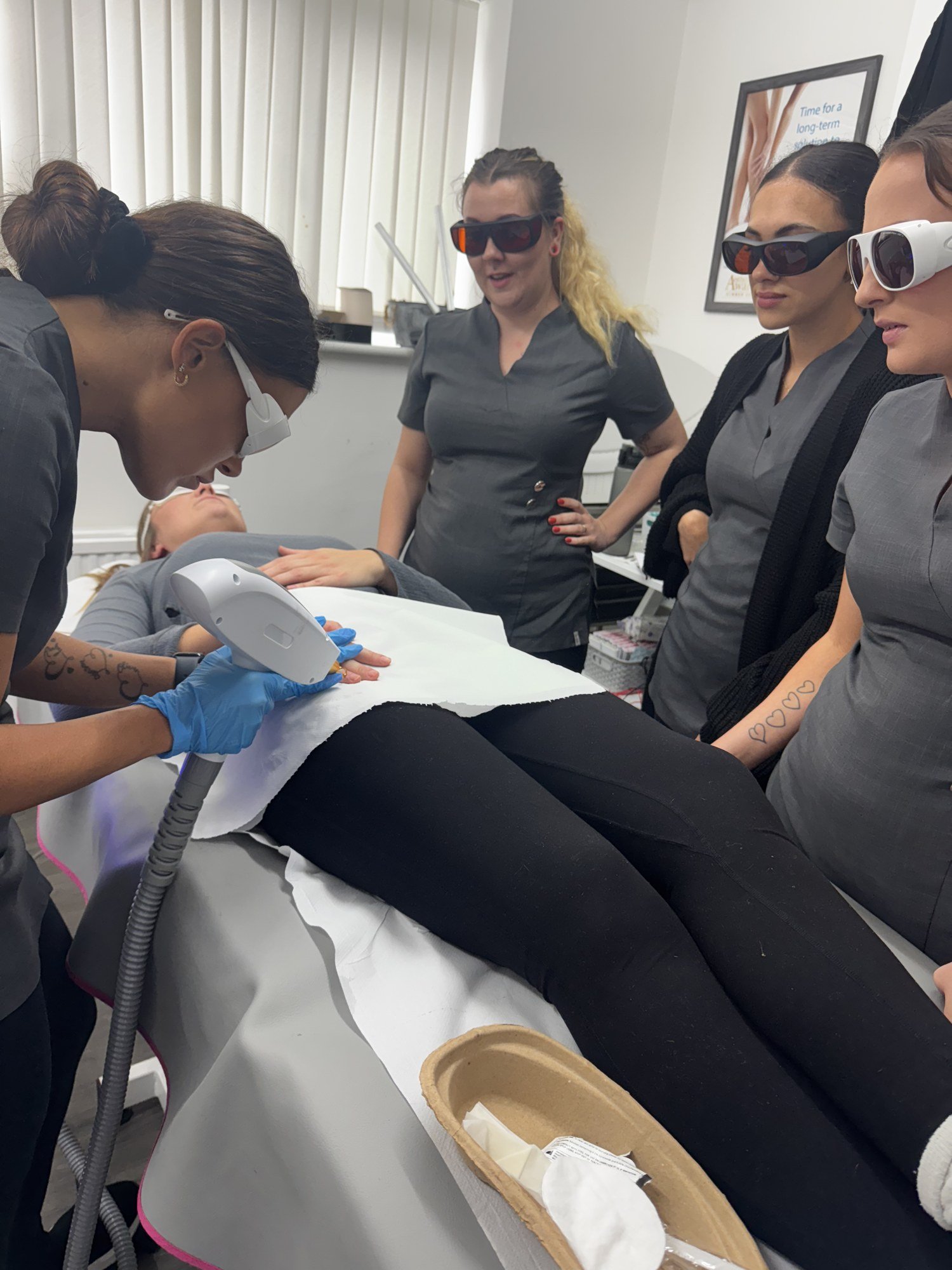
Pigmentation is one of the most common concerns clients bring to a clinic, and one of the easiest to get wrong. This CPD-accredited course goes well beyond technique: it teaches the science of melanin and phototypes, what causes each type of pigmentation, and how light, IPL and Q-switched Nd:YAG reduce it: so you can choose the right treatment and recognise when to stop.
Course structure
Part 1: Safe and legal practice
- Health and safety and your legal duties
- UK regulations, laser safety and the Laser Protection Adviser
Part 2: The science of skin and pigmentation
- The skin, the melanocyte and phototypes
- How pigment is made: melanogenesis and MSH
- Cellular damage, oxidative stress and ageing
- What causes pigmentation, and why
- The types of pigmentation, including post-inflammatory hyperpigmentation
- Consultation, visual analysis and patch testing
Part 3: Treatment
- How light, IPL and laser reduce pigment
- Treatment in practice, technique and protocol
- Clinical endpoints: normal versus stop
- Q-switched Nd:YAG treatment technique
- Treating darker skin types safely
- Aftercare, side effects and complications
Learning outcomes
By the end of this course you will be able to:
- Explain what causes pigmentation and how light treatment fades it
- Identify which pigmented marks respond to treatment and which must be referred
- Carry out consultation, visual analysis and patch testing correctly
- Select and deliver IPL or Q-switched Nd:YAG treatment to protocol, and recognise clinical endpoints
- Adapt your approach for darker skin types
- Give appropriate aftercare and manage side effects and complications
What you take away
Your own student training manual and workbook with learning outcomes for every unit, activities, note-taking pages, short-answer questions, and client forms you can copy and use in your clinic.
Assessment and certification
Short-answer questions and practical assessment during the training day. On successful completion you receive a CPD-accredited certificate.
Course credits
12 CPD credits.
Please confirm with your own insurer that pigmentation reduction is covered on your policy before you book.
Verify this accreditation
This course is CPD accredited and has its own entry on The CPD Register, where the accreditation can be checked independently. View this course on The CPD Register.
Skintastic’s provider listing is here.
Other treatment methods and referral
The course also covers other ways of treating pigmentation and when to refer a client to a GP or dermatologist.
Duration and delivery
Your hardback manual and workbook is posted to you when you book, so you can read ahead. You then attend a practical training day at our academy, 26 The Avenue, Southampton SO17 1XL. The day runs in eight sessions, from UK regulation and laser safety through the skin science, consultation and patch testing, to the full treatment protocol and a supervised practical on live models. Timings are set by your trainer and adjusted to the group.
Entry requirements
A Level 3 qualification in Anatomy and Physiology, and a Laser and IPL Core of Knowledge certificate. Both are available from us.