Advanced Aesthetics • Regulated Training • Trusted Clinical Care

IPL pigmentation treatment, Southampton

IPL Pigmentation Treatment Southampton

Medical-grade IPL for sun spots, age spots, freckles and uneven pigmentation

Are sun damage, brown spots or uneven pigmentation making your skin appear older or less even than you would like? We provide advanced medical-grade IPL pigmentation treatments designed to selectively target suitable areas of unwanted pigmentation while leaving the surrounding skin intact. Following treatment, pigmentation may initially appear darker before gradually breaking down and naturally shedding or fading.

  • Medical-grade IPL
  • MHRA-registered device
  • Full pigmentation assessment
  • Face, hands, neck and décolletage
  • Individual parameters
  • Consultation and patch test
  • Over 15 years’ experience
  • Level 5 practitioner
  • Clients aged 18+ only

From £45 per session

Consultation, skin assessment and patch test – £10

  • Over 15 years’ laser and IPL experience
  • Level 5 qualified laser practitioner
  • Advanced pigmentation training
  • UK Responsible Person, MHRA
  • Medical-grade equipment
  • Mandatory patch testing

We do not treat every brown mark with IPL. Any lesion that appears suspicious, unexplained or unsuitable for cosmetic treatment may require assessment by your GP or dermatologist before we proceed. IPL should never be used to disguise a lesion that requires medical investigation.

How it works

What is IPL pigmentation treatment?

IPL stands for Intense Pulsed Light. Unlike a single-wavelength laser, IPL produces controlled pulses of broad-spectrum light.

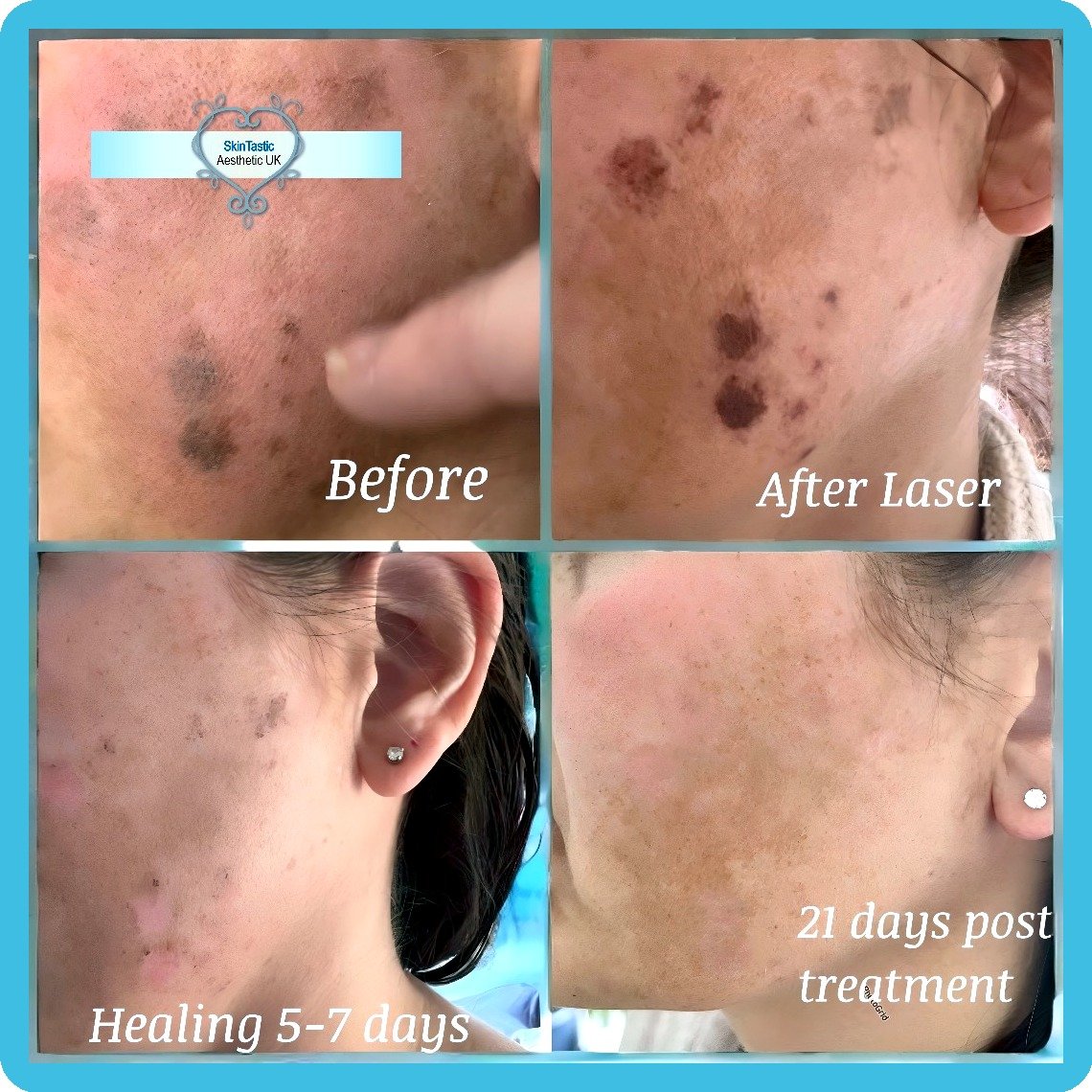
For pigmentation treatment, selected wavelengths are absorbed by melanin, the pigment responsible for colour within the skin. The absorbed light energy is converted into heat within the targeted pigment. This controlled thermal effect can cause suitable superficial pigmentation to darken temporarily before gradually fragmenting and moving towards the skin’s surface.

Over the following days, treated pigmentation may become darker, appear slightly crusted or develop a temporary coffee-ground appearance before naturally shedding or fading.

The aim is a clearer, brighter and more even-looking complexion without aggressively resurfacing the entire skin.

Suitability

What pigmentation can IPL treat?

IPL can be an excellent option for suitable benign, superficial pigmentation, particularly pigmentation caused or worsened by cumulative UV exposure.

  • Sun spots
  • Age spots
  • Solar lentigines
  • Freckles
  • Uneven superficial pigmentation
  • Areas of sun damage
  • Mottled pigmentation
  • Brown spots on the face
  • Brown spots on the hands
  • Pigmentation on the neck
  • Décolletage sun damage
  • Selected post-inflammatory pigmentation

Not every brown mark is suitable for IPL treatment. This is why pigmentation assessment comes before treatment.

Prices

IPL pigmentation treatment prices

Final treatment area and pricing are confirmed following your pigmentation assessment.

Facial pigmentation

Treatment areaSingle sessionCourse of 3
Small pigmented area£45£120
Cheeks£59£159
Cheeks and nose£65£175
Full face£79£215
Face and neck£99£269

Hands, neck and décolletage

Treatment areaSingle sessionCourse of 3
Hands£59£159
Décolletage£89£239
Face and neck£99£269
Face, neck and décolletage£139£375
Sun damage

Sun damage and age spot treatment in Southampton

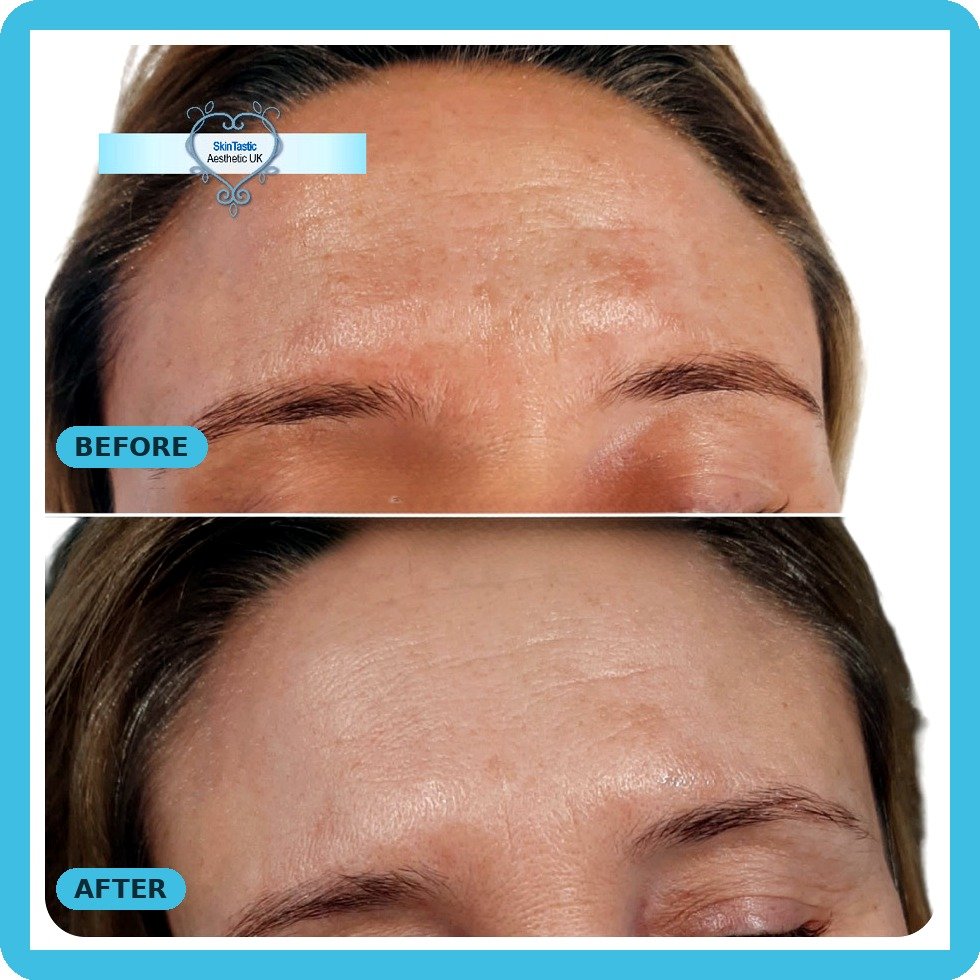
Years of exposure to ultraviolet light can gradually cause areas of excess pigmentation to become visible. These may appear as flat brown marks, age spots, sun spots, freckles, uneven patches of pigmentation or mottled skin tone.

They commonly develop across the areas that receive the most sun exposure, including the face, cheeks, nose, forehead, hands, neck and décolletage. IPL allows us to selectively target suitable areas of pigmentation rather than treating the entire skin as though every area is the same.

Age spots

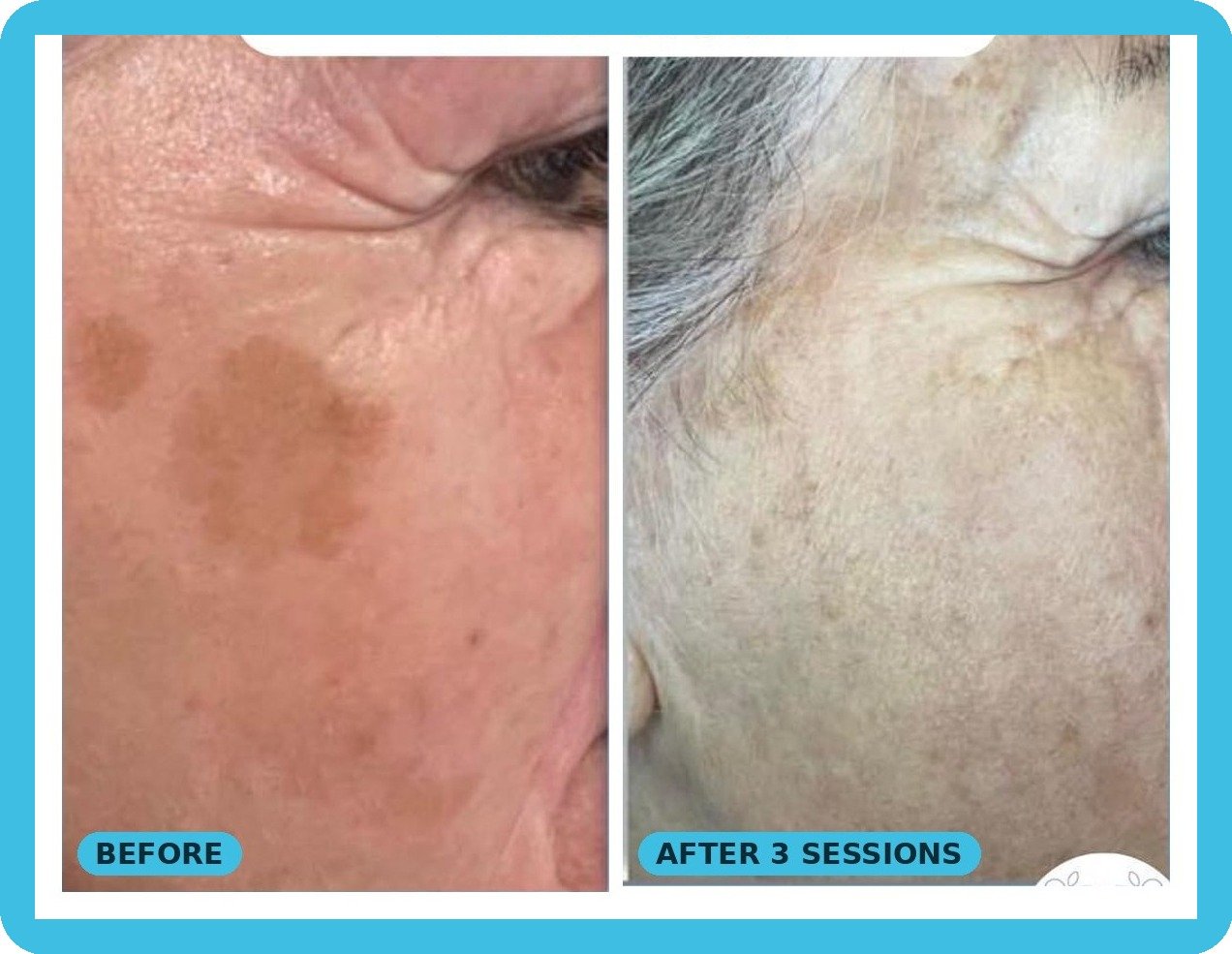
Also known as solar lentigines, these are flat areas of increased pigmentation commonly associated with cumulative sun exposure. Suitable lesions may respond particularly well, but every lesion must be assessed before treatment.

Freckles

Freckles contain increased concentrations of melanin and can respond well in appropriately selected clients. However, freckles are strongly influenced by genetics and UV exposure, so successful treatment does not prevent new freckles developing.

Hands

The backs of the hands receive years of cumulative UV exposure and often develop visible brown spots. Daily SPF on the hands is strongly recommended following treatment to protect your results.

Your course

How many treatments will I need?

Pigmentation treatment is very different from laser hair removal or acne treatment. You may not require a long course.

Some small, superficial pigmented lesions can respond noticeably following one treatment. For more widespread sun damage or multiple areas of pigmentation, approximately two to four treatments may be recommended.

The number of sessions depends on

  • Type of pigmentation
  • Depth of pigmentation
  • Colour of the lesion
  • Size of the area
  • Number of lesions
  • Skin type
  • Treatment location
  • Previous sun exposure
  • Individual response
  • Ongoing UV exposure

For many clients, treatments may be approximately three to four weeks apart. Your skin must have completely settled following the previous treatment before another session is performed, and we assess your skin at each appointment before proceeding.

We will never continue treating an area simply because a package has been purchased if further treatment is no longer appropriate.

What to expect

What happens to pigmentation after IPL?

This is one of the most important things to understand before treatment.

1

Immediately after

The skin may appear slightly red, warm, mildly sensitive or slightly swollen. Individual pigmented spots can immediately appear darker.

2

The following days

The pigmentation may continue to darken. Some treated areas can develop a peppered or coffee-ground appearance. This is often an expected response following successful treatment of suitable superficial pigmentation.

3

Around 7 to 14 days

The darkened pigmentation gradually moves towards the surface and begins to naturally shed or fade. Do not pick, scratch or exfoliate it away. Allow the skin to release the pigment naturally.

4

The following weeks

The treated area may continue to appear clearer and more even as the skin settles. Results vary according to the type and depth of pigmentation.

Particular caution

Melasma is not the same as sun damage

Not all pigmentation should be treated in the same way. Melasma is a complex pigmentation condition that can be influenced by hormonal changes, pregnancy, contraception, genetics, heat, UV exposure and visible light.

IPL is not automatically appropriate for melasma. In some clients, heat and light-based treatments can aggravate melasma or result in pigmentation returning darker. For this reason, we will always assess suspected melasma carefully before recommending treatment. If IPL is not appropriate, we will tell you.

Post-inflammatory hyperpigmentation

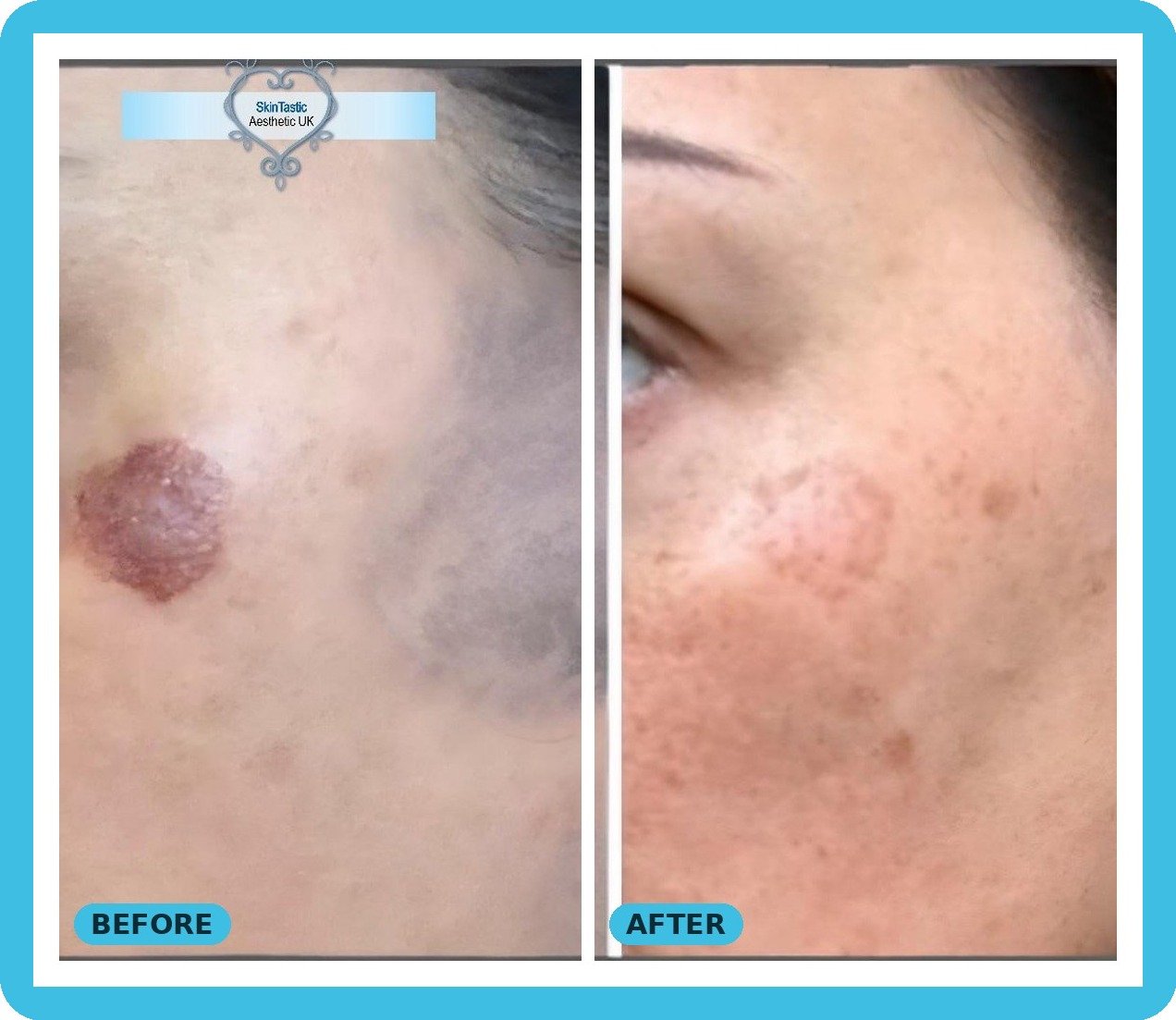
PIH can occur after inflammation or trauma to the skin, following acne, injury, burns, inflammatory skin conditions or previous aesthetic treatments. It requires careful assessment because inappropriate use of heat or light can potentially make pigmentation worse. If you still have significant active acne, we may recommend addressing the active breakouts before beginning a pigmentation programme.

Safety

Why we assess every pigmented lesion before treatment

Many harmless skin lesions are brown. However, changes in pigmentation can occasionally require medical assessment, so we assess the appearance and history of pigmentation before treatment.

Please seek medical advice if a mole or pigmented area

  • Is new or unexplained
  • Has recently changed
  • Has changed shape
  • Has changed colour
  • Has changed size
  • Has irregular borders
  • Contains multiple unusual colours
  • Bleeds without explanation
  • Crusts repeatedly
  • Itches persistently
  • Becomes painful
  • Looks significantly different from your other moles

We do not intentionally treat moles with cosmetic IPL pigmentation treatment. Moles and other lesions may be avoided or covered during treatment where appropriate. If there is any uncertainty about a lesion, medical assessment may be required first.

Skin types

What skin types can have IPL pigmentation treatment?

Our IPL pigmentation protocols are generally intended for suitable Fitzpatrick skin types I to IV, following individual assessment and patch testing.

Pigmentation treatment becomes increasingly complex as natural skin melanin increases, because the treatment must distinguish between the unwanted pigment and the surrounding skin. Your Fitzpatrick skin type, natural skin colour, recent sun exposure, ethnic skin background, pigmentation type and treatment history will all be assessed carefully.

Why a patch test is required

Pigmentation treatment relies on melanin absorbing light. Because melanin is also naturally present within your surrounding skin, treatment settings must be carefully selected. A patch test allows us to assess skin response, pigment response, appropriate parameters, unexpected sensitivity and treatment suitability.

If we do not believe IPL is appropriate for your skin, we will not treat. A full treatment is not carried out until the required patch-test interval has passed and the response has been assessed.

Who we can treat

Aged 18 and over only

IPL pigmentation treatment at SkinTastic is available to clients aged 18 and over. This is in accordance with our insurance requirements and we cannot make exceptions.

Your appointment

Consultation and treatment, step by step

1

Medical history

We review relevant medical conditions, medication and treatment history.

2

Skin assessment

Your Fitzpatrick skin type and natural skin tone are assessed.

3

Pigmentation assessment

We examine the type, colour, distribution, depth where clinically assessable, location, history, changes to the lesion and sun exposure.

4

Patch test

A patch test is carried out using individually selected parameters.

5

Treatment

The area is cleansed, protective eyewear is used, parameters are selected and controlled pulses of light are delivered. The unwanted pigment absorbs the light energy.

6

Endpoint and aftercare

The treatment endpoint and skin response are assessed. Cooling may be used where appropriate and full personalised aftercare is provided before you leave.

Sensation and downtime

What it feels like, and what to expect afterwards

Does it hurt?

Most clients describe the sensation as a brief warm snap or elastic-band-like flick. Areas containing stronger concentrations of pigment can sometimes feel slightly more intense because more light energy is being absorbed by the melanin. Your comfort and skin response are monitored throughout.

Is there downtime?

Usually relatively limited, but the appearance of the pigmentation itself will temporarily change. You should expect treated pigment to potentially become noticeably darker before it becomes lighter. Temporary reactions can include redness, warmth, mild sensitivity, localised swelling, darkening, peppering and light crusting.

Before and after

Preparing for treatment and protecting your results

Before your treatment

  • Avoid tanning and sunbeds
  • Avoid deliberate sun exposure
  • Do not use fake tan on the treatment area
  • Tell us about all medication
  • Tell us about active skincare
  • Do not deliberately irritate or exfoliate the area
  • Inform us of any change to the pigmentation being treated

After your treatment

  • Do not pick or scratch the pigmentation
  • Allow darkened pigment to shed naturally
  • Protect the area from UV exposure
  • Use high-factor SPF as advised
  • Avoid fake tan until the skin has completely settled
  • Avoid aggressive exfoliation
  • Avoid retinoids and strong actives until advised
  • Avoid excessive heat immediately following treatment

Incorrect aftercare and excessive UV exposure can increase the risk of unwanted pigmentation changes. Never stop prescribed medication without speaking to the clinician responsible for prescribing it.

SPF

Treating pigmentation without protecting against UV does not make sense

UV exposure is one of the major contributors to pigmentation development and recurrence.

If you are investing in pigmentation treatment, daily sun protection is one of the most important things you can do to protect your results. We recommend appropriate broad-spectrum, high-factor SPF and sensible sun protection throughout your treatment programme and afterwards. Pigmentation that has been successfully reduced can return following further UV exposure, and completely new pigmentation can develop.

Why us

Why choose SkinTastic for pigmentation treatment?

Pigmentation treatment requires more than seeing a brown spot and firing an IPL pulse at it. Correct assessment is essential.

  • Over 15 years’ laser and IPL experience
  • Level 5 qualified laser practitioner
  • Qualified assessor and IQA
  • UK Responsible Person for medical devices, MHRA
  • Medical-grade IPL technology
  • MHRA-registered medical device
  • Professional laser and IPL training academy
  • Advanced pigmentation-treatment training
  • Individual consultation and patch testing
  • Clear referral boundaries for suspicious lesions

Our aim is not simply to treat pigmentation. It is to treat the right pigmentation, on the right client, using the right treatment approach.

FAQ

Frequently asked questions

How many treatments will I need?

Some superficial pigmentation may show a noticeable response after one session. Typically, approximately two to four treatments may be recommended, depending on the pigmentation, treatment area and individual response.

How long should I leave between treatments?

For many clients, approximately three to four weeks, adjusted according to skin response and manufacturer guidance.

Will my pigmentation get darker after IPL?

It can. Suitable pigmentation commonly becomes darker immediately or during the first few days following treatment. This can be an expected part of the treatment response.

How long does the dark pigmentation last?

Darkened superficial pigmentation may begin shedding or fading over approximately seven to fourteen days, although responses vary.

Should I exfoliate the pigmentation off?

No. Do not pick, scratch or aggressively exfoliate treated pigmentation. Allow it to shed naturally.

Can IPL remove sun spots?

Suitable superficial sun spots can respond very well. Every pigmented lesion must first be assessed.

Can IPL treat freckles?

Suitable freckles can respond, although genetics and future UV exposure can cause freckles to return or new freckles to develop.

Can IPL treat melasma?

IPL is not automatically appropriate for melasma and may aggravate it in some clients. Suspected melasma requires careful assessment before a treatment programme is recommended.

Can you IPL over a mole?

We do not intentionally use cosmetic IPL to treat moles. Suspicious or unexplained lesions must be medically assessed.

Is IPL suitable for darker skin?

IPL pigmentation treatment requires careful consideration of natural skin melanin. Our current protocols are generally intended for suitable Fitzpatrick I to IV skin types following individual assessment and patch testing.

Is IPL pigmentation treatment permanent?

A successfully treated pigmented lesion may remain significantly reduced, but IPL cannot prevent future pigmentation. Further UV exposure, ageing and hormonal influences can contribute to new pigmentation developing.

Do I need a patch test?

Yes. Every IPL pigmentation client requires a consultation, medical history review, pigmentation assessment and patch test before treatment.

How much is the consultation?

£10.

What is the minimum age?

You must be 18 or over. We cannot provide IPL pigmentation treatment to anyone under 18 due to our insurance requirements.

Book your IPL pigmentation consultation in Southampton

If sun spots, age spots, freckles or uneven pigmentation are bothering you, the first step is identifying what type of pigmentation you actually have. We will assess your skin and pigmentation before recommending treatment. If IPL is appropriate, we will create an individual treatment plan and carry out your patch test. If IPL is not right for you, we will tell you.

Consultation, medical history review, pigmentation assessment and patch test – £10

SkinTastic Aesthetics Southampton
26 The Avenue
Southampton
SO17 1XL

Telephone: 02381 946394

Scroll to Top