An IPL photofacial for sun damage, pigmentation and facial redness
Brown patches from years in the sun, a flush of redness across the cheeks, tiny broken veins around the nose. IPL skin rejuvenation is designed to work on several of these at once, using pulses of filtered light from a medical-grade device at our Southampton clinic.
Medical-grade IPL
MHRA-registered device
Sun damage and age spots
Facial redness and thread veins
Uneven skin tone
30–45 minutes
Minimal downtime
Course of 3–6 sessions
Patch test first
Clients aged 18+ only
From £49 per session
Consultation and patch test – £10, required before your first treatment
IPL is not suitable for every skin type or every skin concern. Your consultation and patch test decide whether treatment goes ahead, and what a realistic course looks like for your skin.
Real results
Results from our own clinic
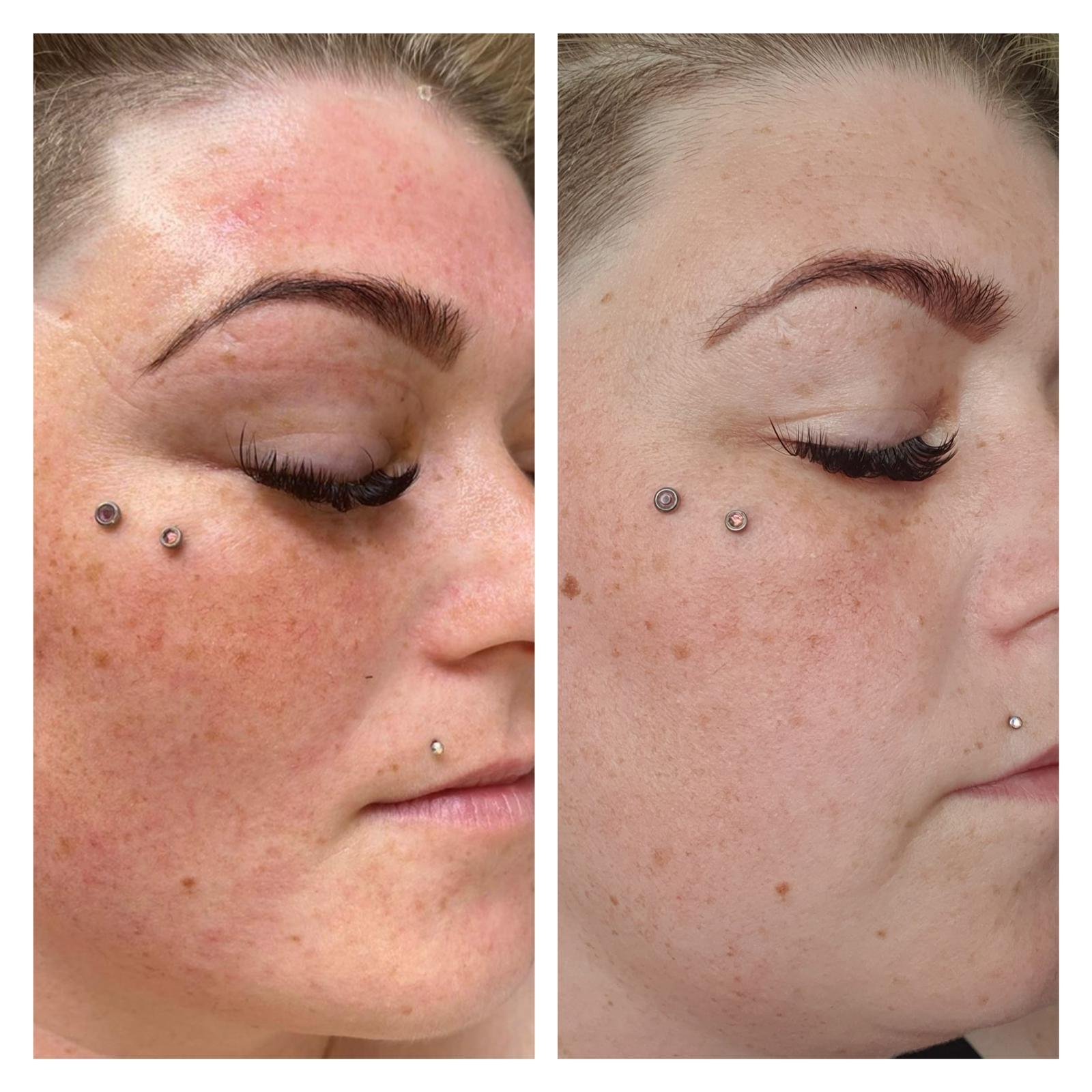
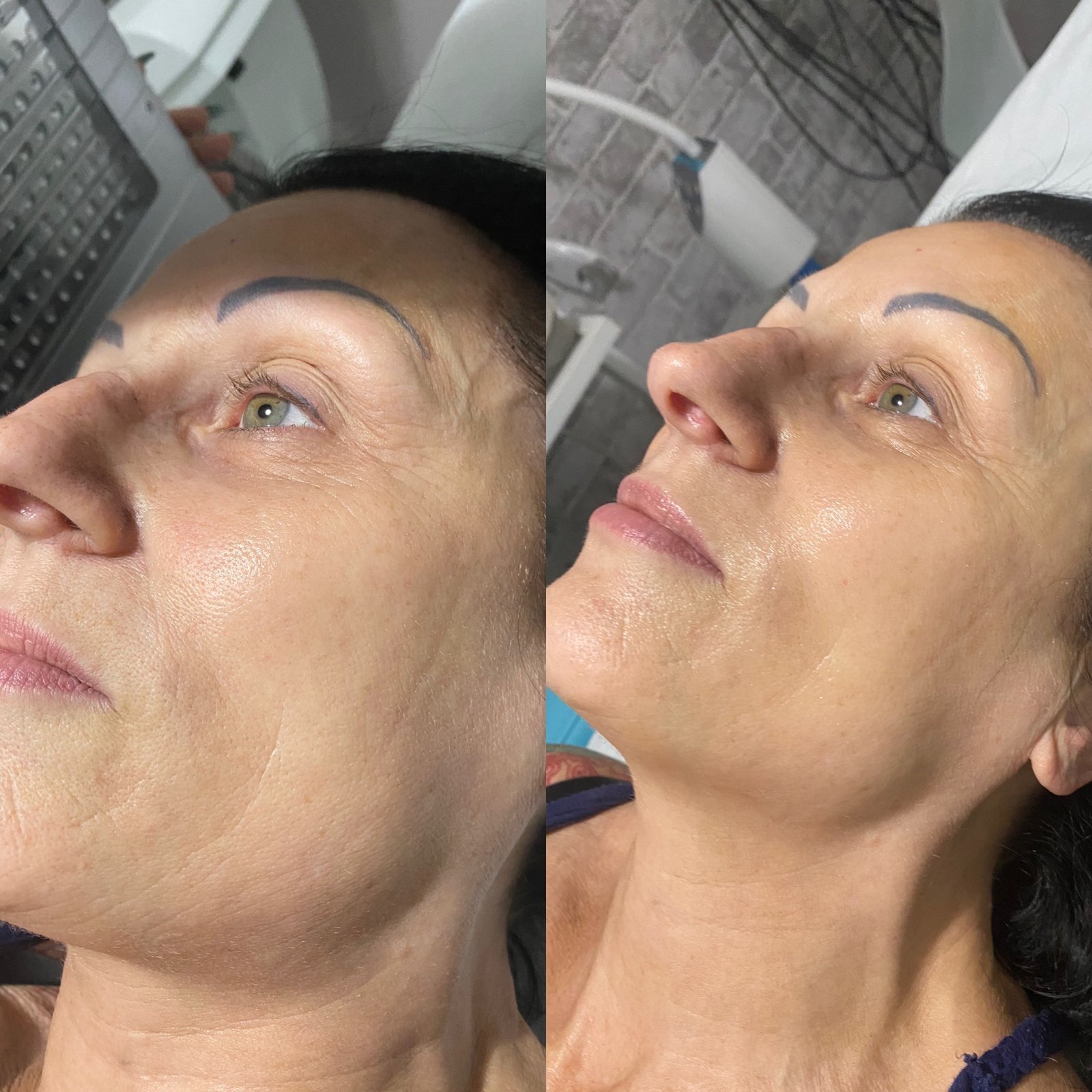
Genuine Skintastic clients treated with IPL at our Southampton clinic. Individual results vary and are not guaranteed, and the number of sessions depends on your skin and what is being treated.
Redness and uneven tone across the cheek, before and after a course of IPL.
Sun damage and uneven tone on the face and neck, before and after IPL.A short video of IPL results and treatment. Press play to watch.
What it is
What is IPL skin rejuvenation?
IPL stands for intense pulsed light. Unlike a laser, which uses a single wavelength, IPL delivers a broad band of light that is filtered to suit the concern being treated.
You may also see it called IPL photo rejuvenation, an IPL photofacial or simply a photofacial. They all describe the same idea: using controlled flashes of light to reduce the visible signs of sun exposure and ageing, rather than treating one mark at a time.
That makes it a good fit if you have more than one thing going on, for example pigmentation alongside redness and a generally uneven tone. Every treatment follows a consultation and patch test, and the settings are chosen for your skin type and the condition being treated.
What IPL may help with
Sun damage
Sun spots and age spots
Freckles
Uneven pigmentation
Facial redness
Broken capillaries
Thread veins
Redness linked to rosacea
Uneven skin tone
Dull, tired-looking skin
Signs of photo-ageing
Common areas are the face, neck, chest, décolletage and the backs of the hands. Any mark that looks unusual, has changed, bleeds or itches should be checked by your GP or a dermatologist before any cosmetic treatment.
How it works
How IPL targets brown marks and redness
Different parts of the skin absorb different wavelengths of light. IPL uses that to aim the energy where it is needed and leave the surrounding skin as undisturbed as possible.
Pigmentation and sun spots
The light is absorbed by melanin in the darker patches. Treated spots usually look darker for a few days, sometimes like fine coffee grounds, before they gradually flake away as the skin renews. Please do not pick or scrub them.
Redness and small vessels
For redness and thread veins, the light is absorbed by haemoglobin in the small blood vessels near the surface. Over a course of sessions, visible redness and fine vessels may become less noticeable.
Our approach
Why the device and the practitioner matter
Not all IPL is the same. Results, and your safety, depend on the device, the settings and the person holding the handpiece.
We use a medical-grade, MHRA-registered laser and light system rather than a basic salon IPL. Before any treatment we will:
Talk through your concerns and what you would like to achieve
Assess your skin type, pigmentation and any redness or visible vessels
Go through your medical history and any medication you take
Carry out a patch test and check how your skin responds
Set the treatment parameters for your skin, not a one-size-fits-all programme
Provide proper eye protection for you and your practitioner
Give you clear written aftercare
Prices
IPL skin rejuvenation prices, Southampton
Treatment area
Single session
Course of 3
Course of 6
Full face
£49
£135 (save £12)
£249 (save £45)
Full face and neck
£69
£189 (save £18)
£349 (save £65)
A consultation and patch test (£10) are required before your first treatment. Other areas, such as the chest or hands, can be priced at your consultation.
IPL works best as a course. Most clients have between 3 and 6 sessions, spaced around 3 to 4 weeks apart.
How many you need depends on what we are treating, how deep or widespread it is, and how your skin responds. Pigmentation often shows a change sooner, while redness and fine vessels can take a few sessions. We will give you a realistic plan after your consultation and patch test, and review it as you go.
Sun damage does not stop once treatment ends, so some clients choose an occasional maintenance session. Daily SPF is the single biggest thing you can do to protect your result.
On the day
What happens during an IPL treatment?
1
Check-in
We confirm there have been no changes to your health, medication or recent sun exposure since your patch test.
2
Preparation
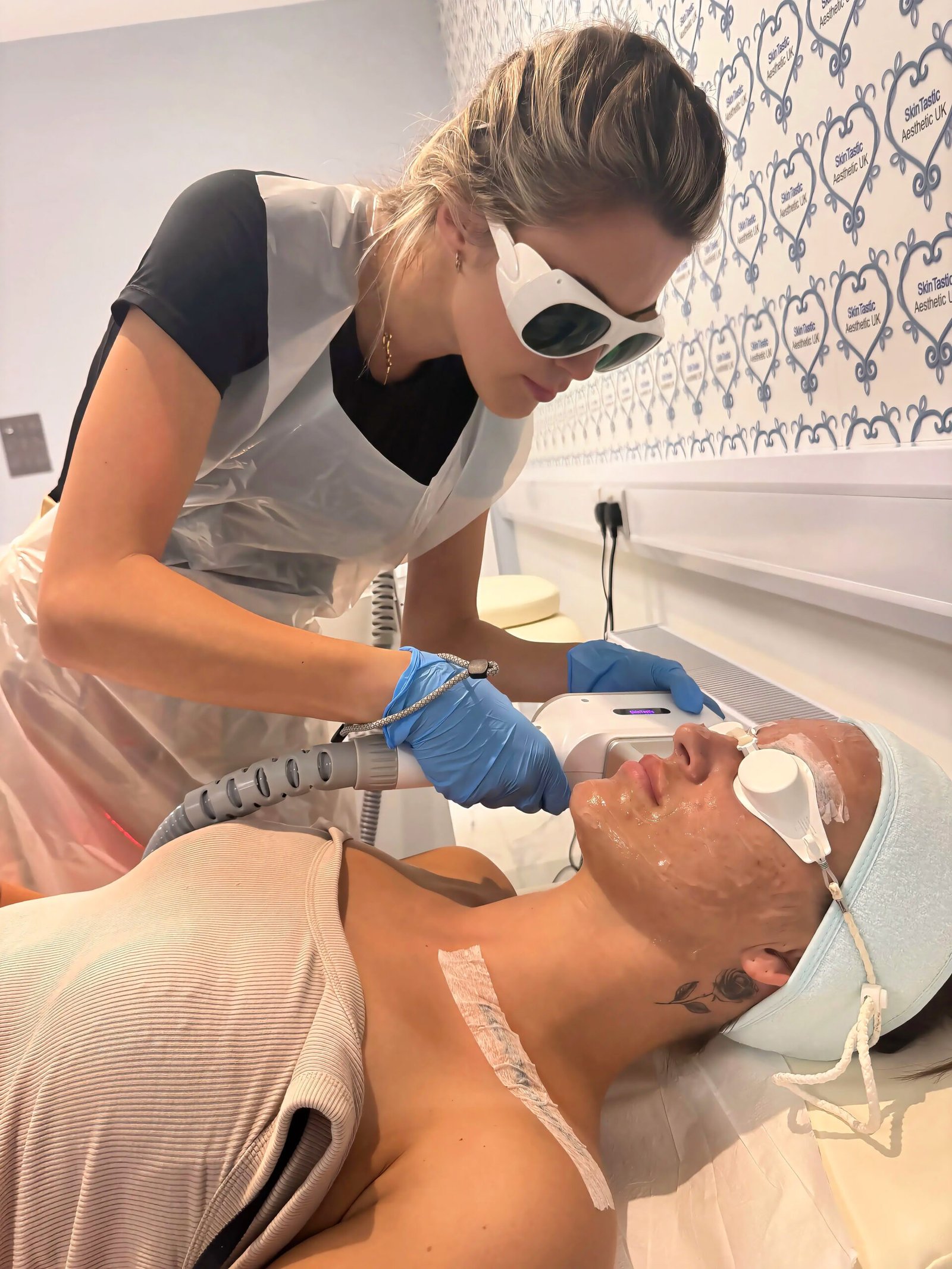
Your skin is cleansed, protective eyewear goes on, and a cool gel may be applied to the area.
3
Treatment
The handpiece is moved across the area in pulses. A full face usually takes 30 to 45 minutes.
4
Aftercare
We apply soothing care and SPF, and go through your aftercare before you leave.
Does IPL hurt? Most clients describe a quick warm flick, a bit like a rubber band, with each pulse. No anaesthetic is needed, and we check how your skin is responding throughout.
Afterwards
Downtime and aftercare
Downtime is usually minimal and most people go straight back to their day.
What is normal
Redness and warmth, like mild sunburn
Slight swelling
Temporary sensitivity
Brown spots looking darker
Darker spots then fade and flake over the following days.
For the first few days, avoid
Direct sun and sunbeds
Saunas and steam rooms
Hot baths
Strenuous exercise
Exfoliating or active skincare
Picking treated spots
Use a broad-spectrum SPF 30 to 50 every day throughout your course.
Suitability
Is IPL right for you?
IPL generally suits lighter skin types best, because darker skin contains more melanin that also absorbs the light. If IPL is not the right choice for your skin, we will tell you and talk through the alternatives.
Treatment may need to be delayed or avoided if you have:
An active tan or recent sun exposure
Fake tan on the area
Photosensitising medication
Recent isotretinoin (for example Roaccutane)
Pregnancy
An active skin infection or cold sore in the area
Certain medical or pigmentation conditions
IPL does not cure rosacea. For some people it can reduce the look of persistent redness and visible vessels, but rosacea varies a great deal from person to person, so we always assess it individually first.
For active acne and the marks it can leave behind.
Common questions
Frequently asked questions
Is IPL the same as a laser?
No. A laser uses one wavelength, while IPL uses a broader band of filtered light. That is why IPL can treat pigmentation and redness in the same session.
When will I see a difference?
Brown spots often darken and flake within a week or two. Redness tends to improve gradually over the course, and results continue to develop between sessions.
Can I have IPL in the summer?
It is possible, but you must avoid tanning and protect your skin with SPF every day. Many clients prefer autumn and winter, when the sun is weaker.
Can IPL treat melasma?
Melasma is hormonal and can react unpredictably to heat and light, so IPL is not always the right choice. We will assess it carefully and be honest about your options.
Is there any downtime?
Usually very little. Expect some redness and warmth for a few hours, and darker spots that flake over the following days.
Do I need a patch test?
Yes. A consultation and patch test are required before your first treatment, so we can check your suitability and how your skin responds.
Book your IPL skin consultation in Southampton
Full face IPL from £49, and courses from £135. Start with a consultation and patch test, and we will tell you honestly what IPL can do for your skin.