
CPD Accredited · 40 Credits · Three Parts
Radio Frequency, Laser Liposuction and Ultrasound Cavitation
The complete non surgical body contouring course, delivered in three parts. Theory you work through in your own time, then hands on practical training on live models at our Southampton academy.
£49940 CPD creditsThree partsLive modelsWritten manual includedAccredited certificate
Book your place, £499Message us on WhatsAppHow the course is structured
The course is set out in three parts. You complete all three, and the accredited CPD certificate is issued once you have successfully finished the lot.
Each part has its own written manual, its own set of questions at the end of every section, and its own practical assessment. The theory is yours to work through at your own pace, and you keep the manuals.
The practical training is face to face at our academy on The Avenue in Southampton. You work on live models under supervision until you are confident with the machine, the settings and the technique for each area of the body.
The whole course carries 40 points towards your CPD.
- Part 1, Radio Frequency
- Part 2, Laser Liposuction
- Part 3, Ultrasound Cavitation
- Written manual for each part
- Questions at the end of every section
- Practical assessment on live models
- A client case study
- 40 CPD credits on completion of all three
The three parts
Part 1
Radio Frequency
Skin tightening, cellulite reduction and body contouring. Anatomy and physiology of the skin, how RF works, applicators, energy settings, safety, consultation, treatment and device protocols, and compliance.
Part 2
Laser Liposuction
Fat reduction and skin tightening with low level laser. Fat cell anatomy, the position of the fat layer, how red light penetrates tissue, fat metabolism, the role of the lymph nodes, protocols and aftercare.
Part 3
Ultrasound Cavitation
Low frequency ultrasound for fat reduction and cellulite. The science of cavitation, fat cells and lipolysis, machines and safety protocols, step by step treatment, adverse reactions and aftercare.
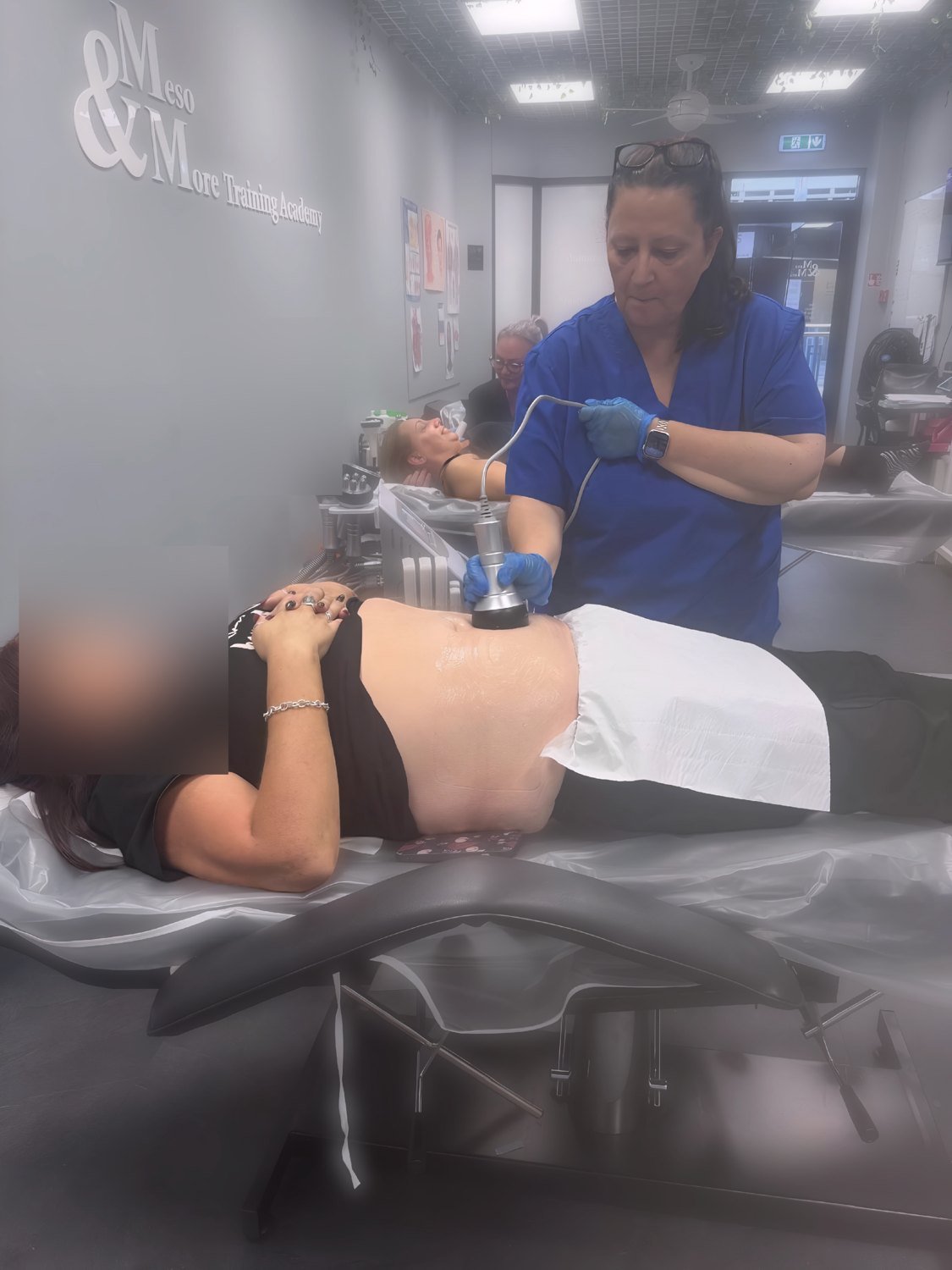
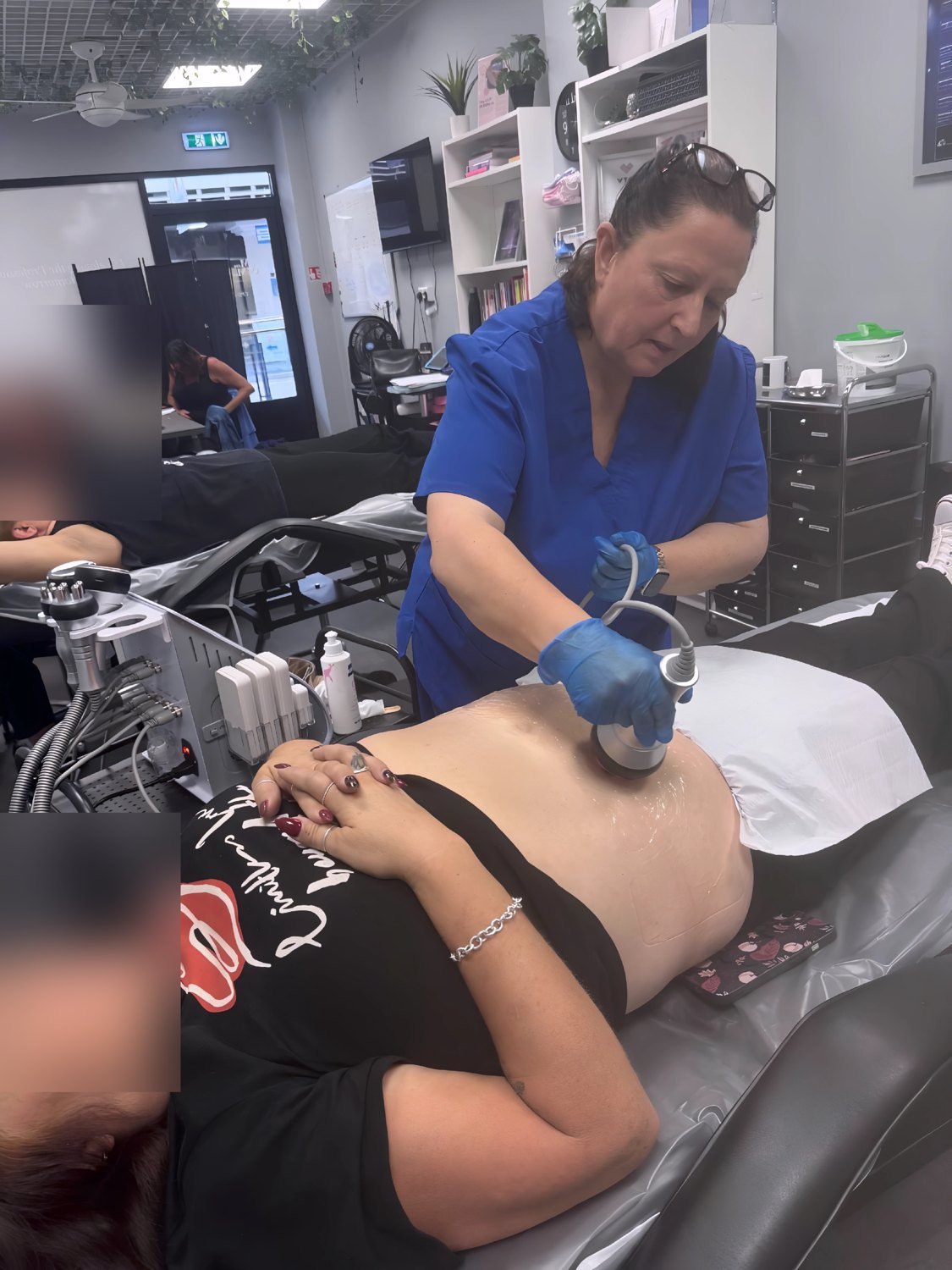
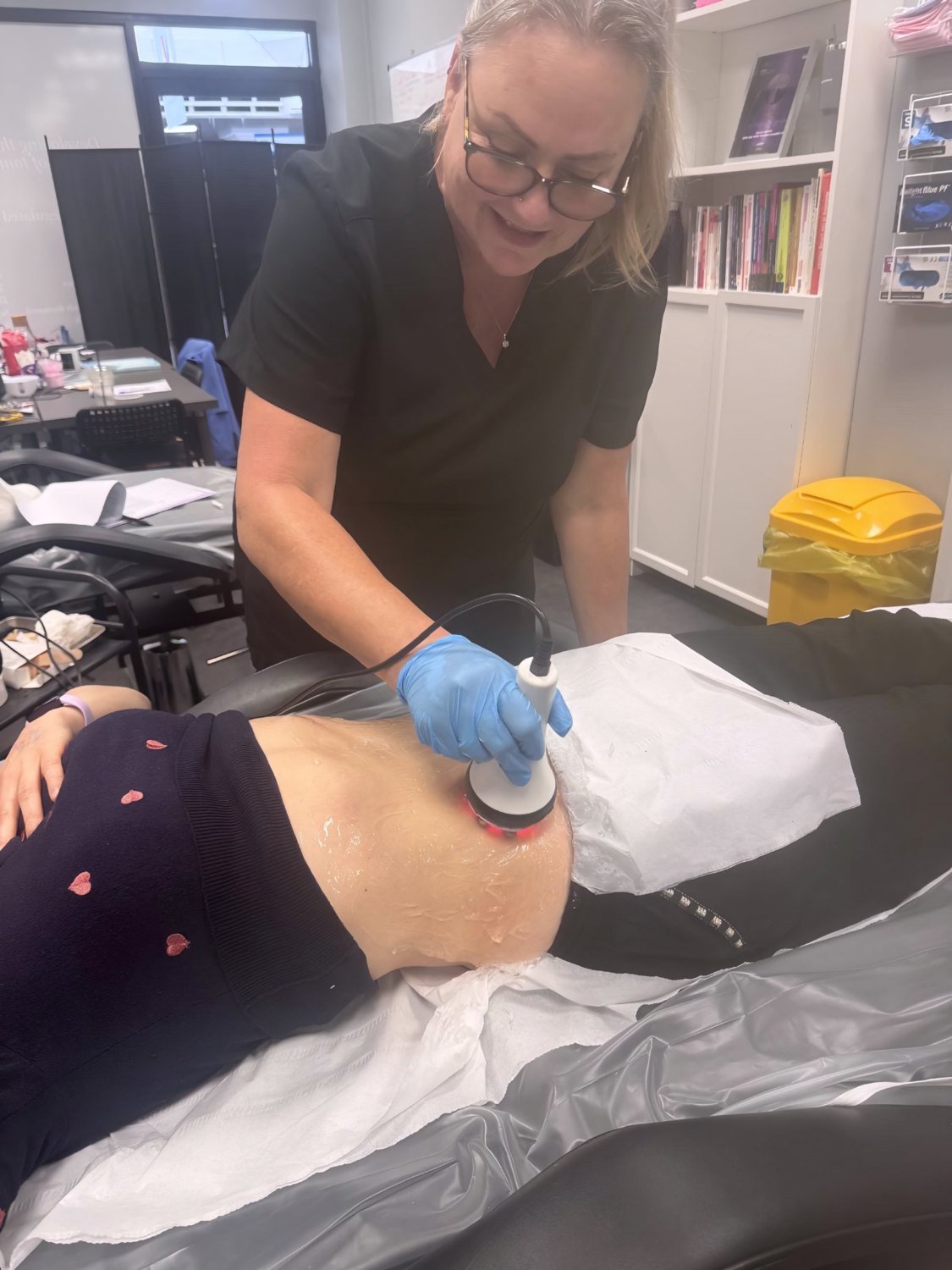
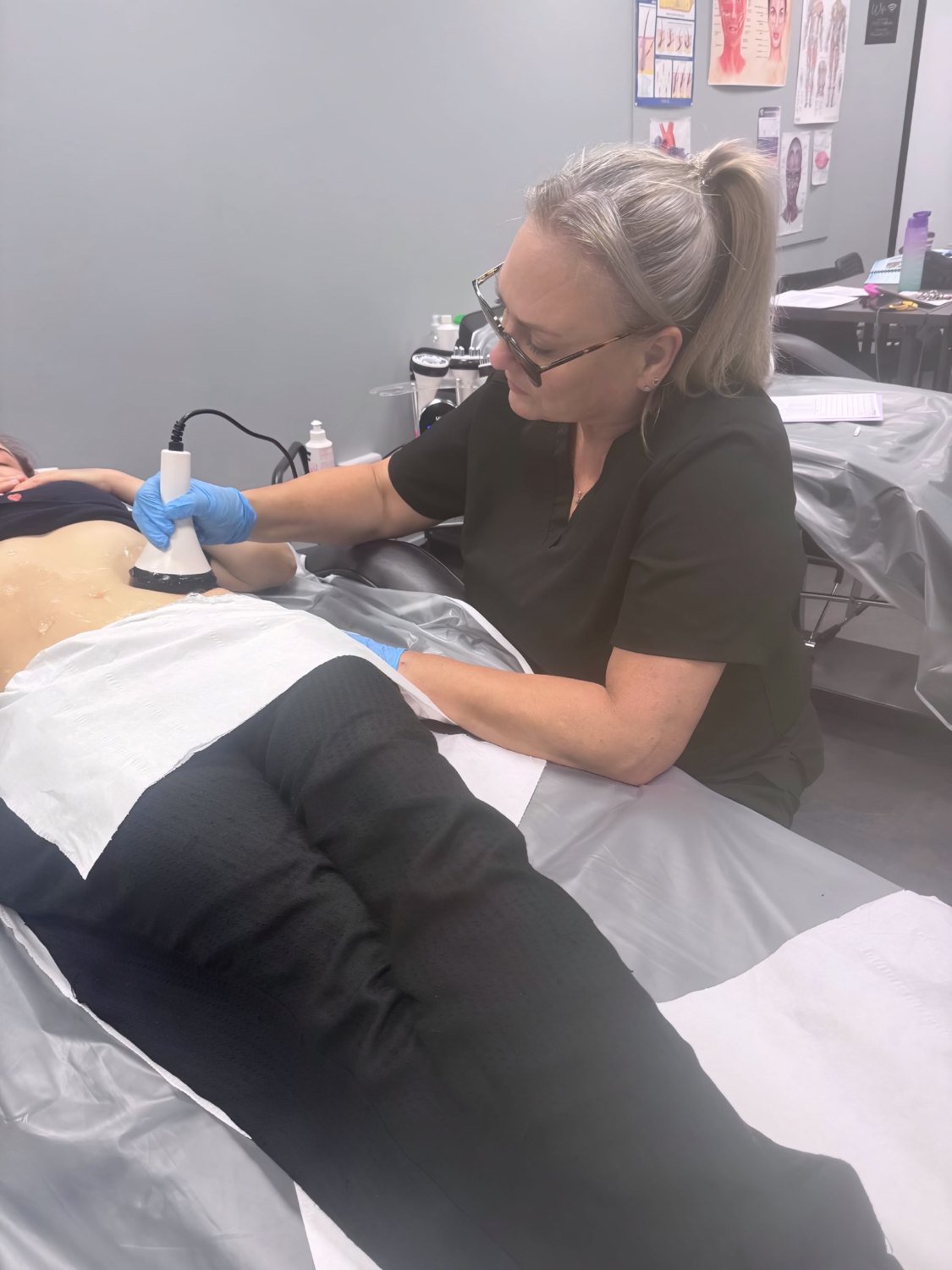
Inside the practical days
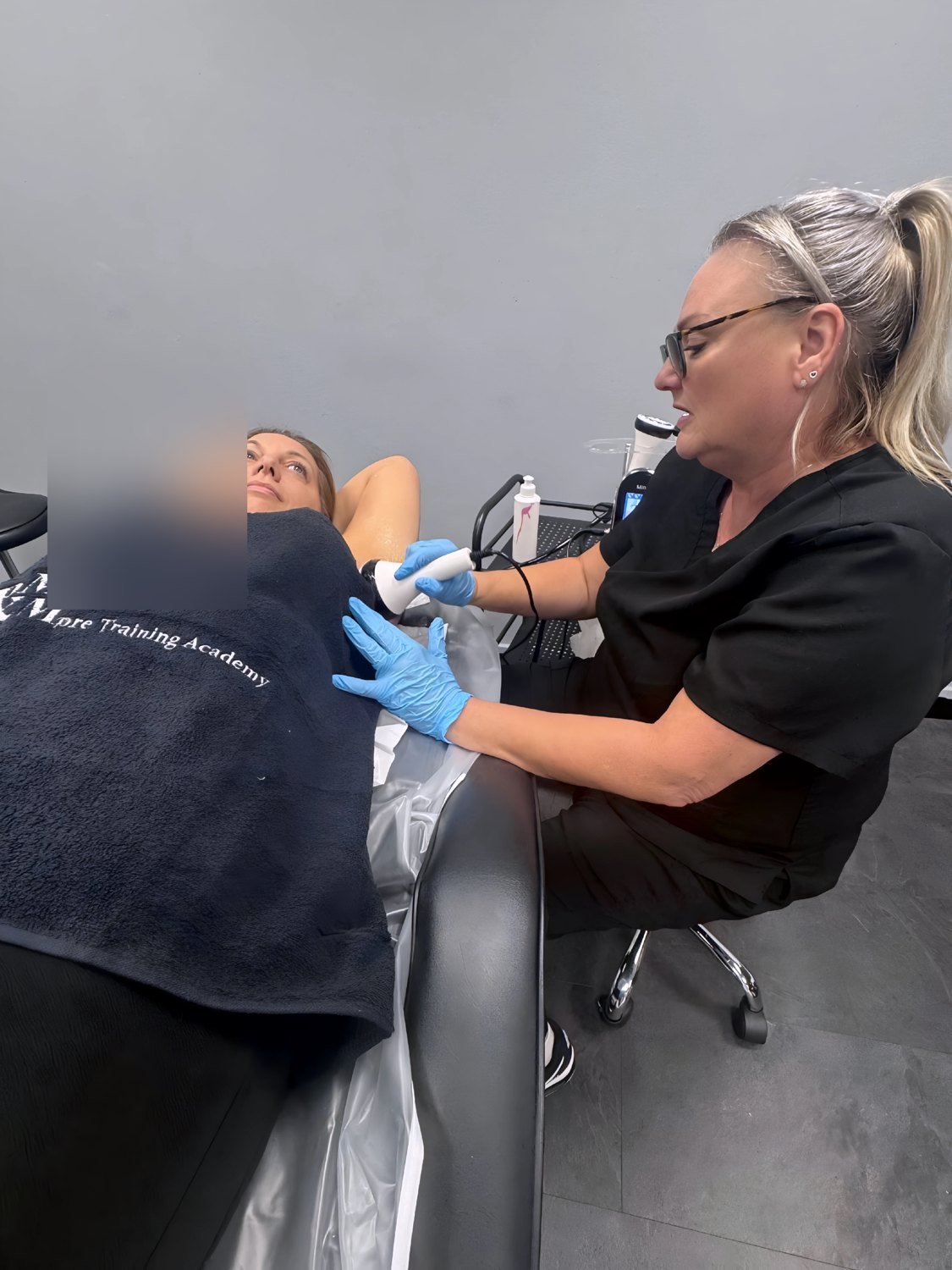
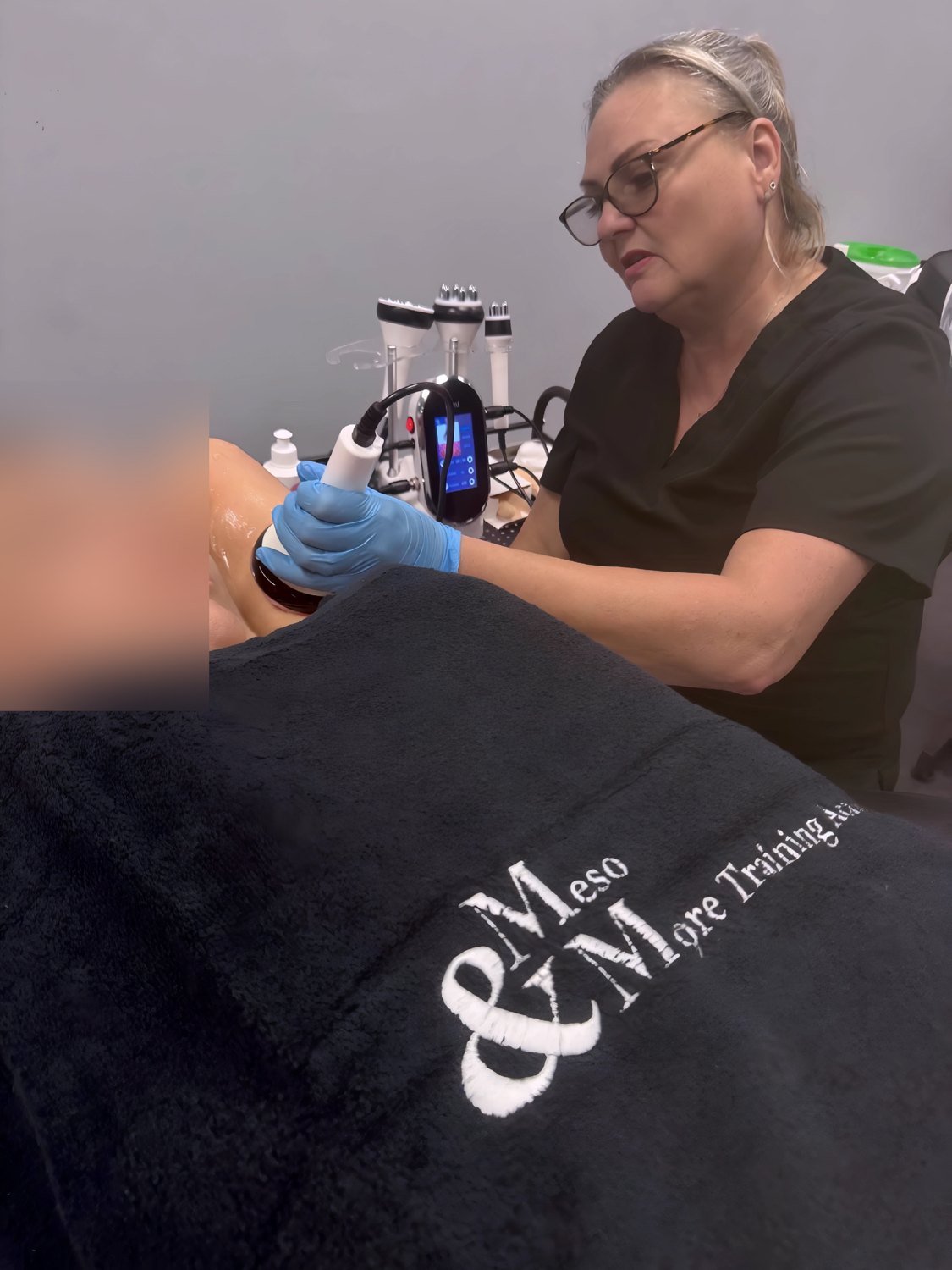
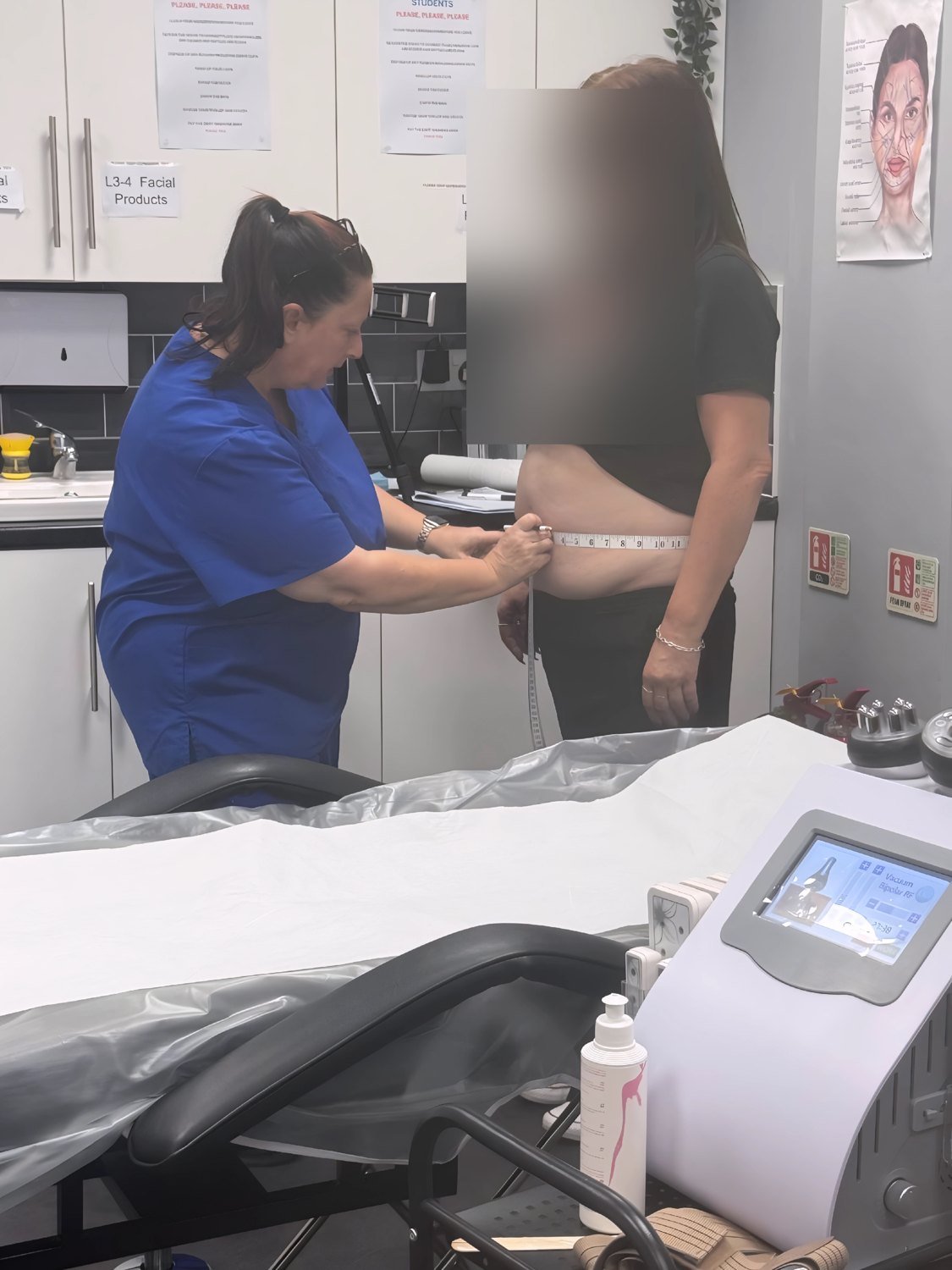
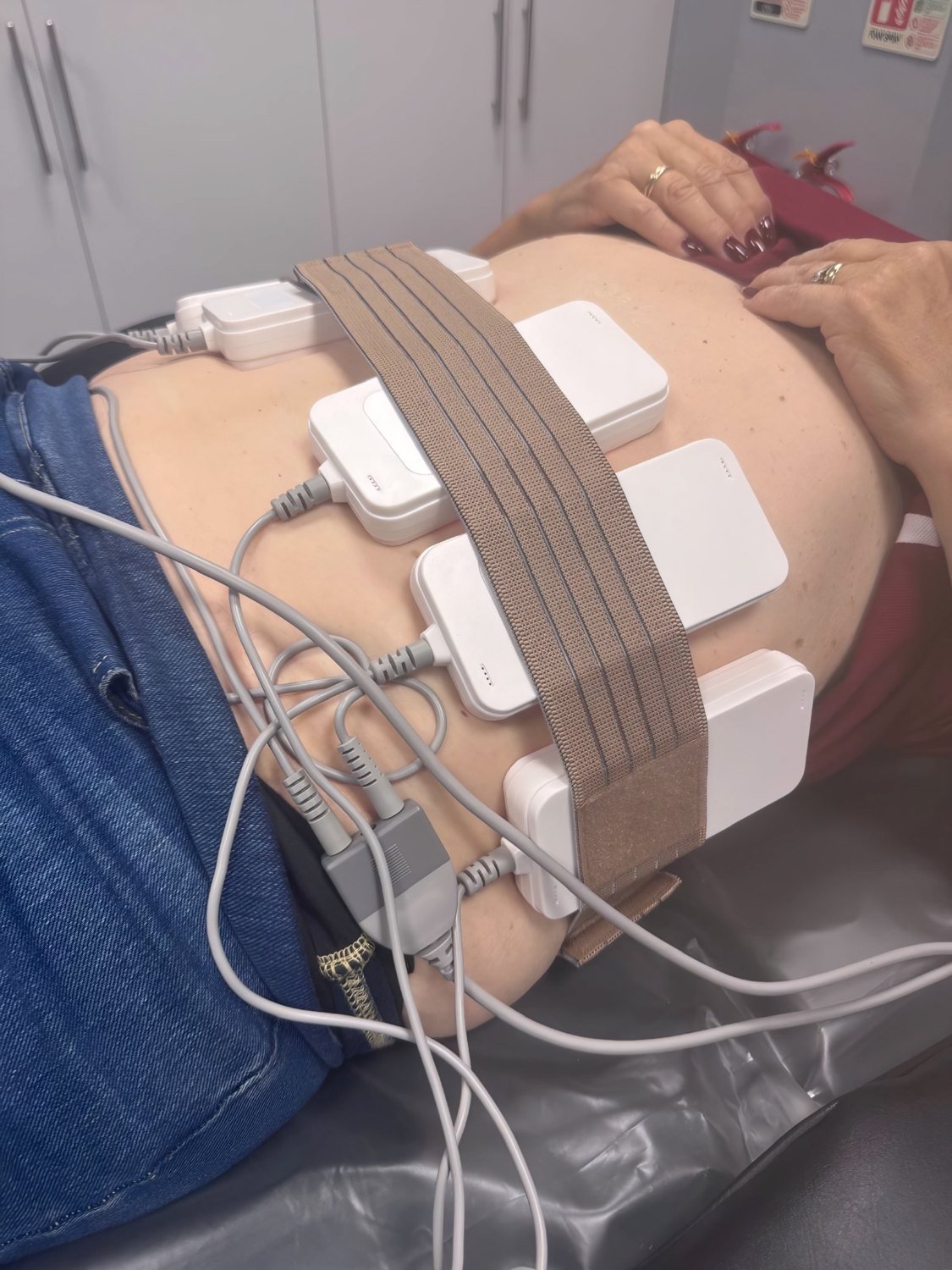
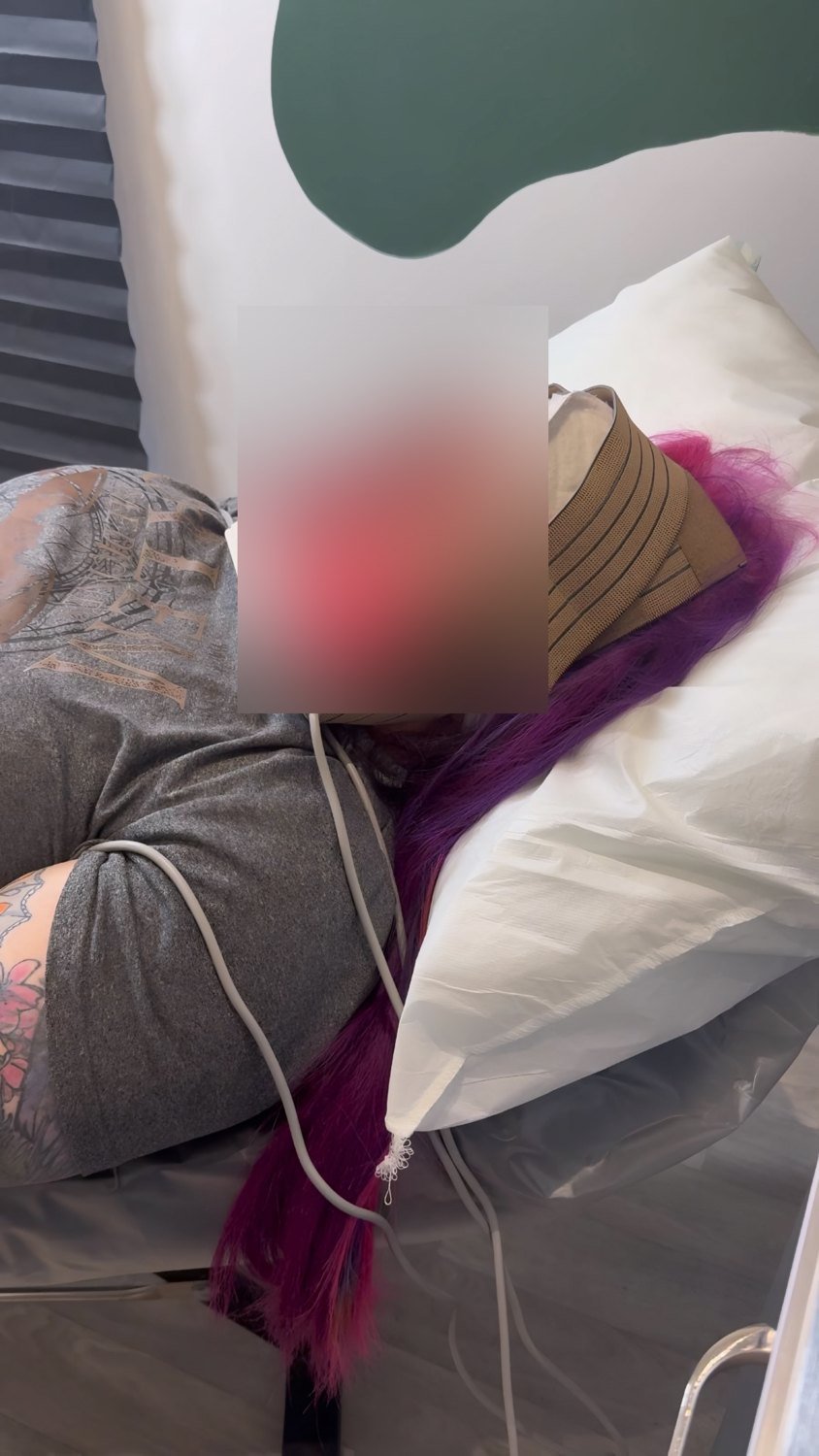
Photographs from our own training days at the academy. Our models have kindly agreed to appear, and their faces have been obscured for their privacy.
Learning outcomes, Part 1 Radio Frequency
On successful completion of the radio frequency part of this course you will be able to:
1. Understanding radio frequency technology
- Define radio frequency energy and explain its role in aesthetic and therapeutic treatments
- Differentiate between monopolar, bipolar and multipolar RF systems and their specific applications
- Explain the science behind RF induced collagen production, skin tightening and fat reduction
2. Anatomy and physiology relevant to RF
- Identify the layers of the skin, epidermis, dermis and subcutaneous, and describe how RF affects each layer
- Explain collagen and elastin remodelling in response to RF energy
- Recognise the role of blood circulation and lymphatic drainage in RF treatments
3. RF equipment and treatment techniques
- Demonstrate correct RF device setup, calibration and safe operation
- Select appropriate energy levels, pulse duration and treatment modes based on skin type and treatment goals
- Perform proper handpiece movements, circular, linear and lifting techniques, for optimal results
4. Client consultation and assessment
- Conduct a thorough client consultation including medical history review and suitability assessment
- Recognise contraindications and precautions such as pregnancy, pacemakers and skin infections
- Obtain informed consent, ensuring clients understand the benefits, the risks and the expected outcomes
5. Treatment planning and execution
- Develop customised RF treatment plans based on individual skin concerns and goals
- Demonstrate step by step treatment protocols for the face, neck and body
- Apply conductive gel correctly and adjust treatment settings for different skin types
6. Health and safety in RF treatments
- Identify potential risks and side effects, including burns, hyperpigmentation and discomfort, and how to prevent them
- Follow hygiene and infection control measures, including equipment sanitisation
- Implement emergency procedures for adverse reactions
7. Post treatment care and client aftercare
- Provide clients with appropriate post treatment instructions, including hydration, sun protection and skincare advice
- Identify signs of post treatment complications and know when to refer a client for medical evaluation
- Recommend follow up sessions and maintenance plans for long term results
8. Industry standards, regulations and business
- Understand UK regulations for RF treatments, including licensing, insurance and equipment compliance
- Comply with data protection law, UK GDPR, when handling client records
- Develop strategies for marketing RF treatments, pricing and client retention
Learning outcomes, Part 2 Laser Liposuction
By the end of this part of the course you will:
Science and anatomy
- Understand the science behind laser liposuction, including its effects on fat cells and skin
- Understand skin anatomy and how it relates to laser liposuction treatments
- Understand how red light penetrates the skin and interacts with tissue
- Understand how fat is metabolised after treatment and the role of the lymph nodes
Practice and safety
- Identify suitable candidates and contraindications for the procedure
- Follow step by step treatment procedures, including pre treatment preparation and post care recommendations
- Understand the safety protocols and best practice for operating laser liposuction devices
- Recognise and manage adverse reactions
Compliance and business
- Be familiar with UK government regulations relating to aesthetic laser treatments
- Have the policies and procedures you need in place before you treat
- Develop marketing and client retention strategies for a successful business
Practical skills
- Set up and handle the laser liposuction machine correctly
- Carry out a detailed client consultation
- Apply laser lipo treatments safely and effectively on a model
- Use and place the pads correctly for different areas of the body
- Monitor and adjust treatment settings during the session
- Maintain hygiene and infection control throughout
Learning outcomes, Part 3 Ultrasound Cavitation
By the end of this part of the course you will be able to:
Knowledge and understanding
- Demonstrate an understanding of the scientific principles behind ultrasound cavitation
- Identify and explain the indications and contraindications for treatment
- Understand fat cells, the process of lipolysis and fat metabolism
- Understand frequency settings for different body areas and how treatment is customised
Delivering the treatment
- Correctly operate an ultrasound cavitation device and adjust settings based on client needs
- Perform a thorough client consultation and create personalised treatment plans
- Safely and effectively apply treatment protocols and techniques
- Use correct hand positioning, pressure and device movement
Safety and aftercare
- Maintain high standards of hygiene and infection control
- Recognise and manage potential side effects and adverse reactions
- Provide clear and accurate aftercare advice to clients
- Understand and adhere to the health and safety regulations governing the use of ultrasound cavitation
Assessment and review
- Demonstrate practical competency by performing a full treatment session with correct technique, safety measures and client care
- Evaluate client treatment outcomes and make appropriate adjustments for future sessions
- Submit a case study documenting client treatment progress and results
- Successfully complete a practical assessment under examination conditions
| Section | What it covers |
|---|---|
| Anatomy and physiology of the skin | Collagen, elastin, the changes that occur, effects on the dermis and epidermis, and subcutaneous fat in body contouring |
| How radio frequency works | Effects and benefits, types of treatment, mechanism of action and thermal effects |
| RF applicators | Multipolar, vacuum, cavitation, fractional, facial, hexapolar, tripolar, monopolar and bipolar |
| Energy settings | Intensity, frequency, pulse duration, treatment modes and how to determine the right settings |
| Safety precautions | Client safety, equipment safety, hygiene and emergency preparedness |
| Comparison with other treatments | How RF compares with lasers, ultrasound and microneedling for skin rejuvenation |
| Consultation and documentation | Assessing the client, tests, contraindications and potential side effects |
| Treatment and device protocols | Skin tightening, wrinkle reduction, body contouring and maintenance of the RF device |
| Compliance | Regulations, legislation and your legal obligations |
| Practical skills assessment | Assessed practical, assessor feedback and learner course feedback |
| Section | What it covers |
|---|---|
| Introduction and origins | What laser liposuction is, its history and how it developed from traditional liposuction |
| Anatomy | Anatomy and physiology of fat cells, skin anatomy relating to liposuction, and the position of the fat layer |
| The science | How laser liposuction works, how red light penetrates the skin and interacts with tissue |
| After the treatment | Metabolism of fat following treatment and the importance of the lymph nodes |
| Suitability | Benefits and indications, contraindications and precautions |
| Consultation | Client consultation and assessment |
| Equipment | Equipment and safety protocols, and the machines used |
| Delivering treatment | Treatment procedure, aftercare and post treatment recommendations |
| When things go wrong | Troubleshooting and managing adverse reactions |
| Compliance and business | UK government statutory requirements and regulations, the policies and procedures to have in place, and business and marketing |
| Section | What it covers |
|---|---|
| History, definition and purpose | What ultrasound cavitation is and what it is used for |
| The science | How ultrasound waves create microbubbles in the interstitial fluid and rupture the fat cell membrane |
| Fat cells and lipolysis | Subcutaneous and visceral fat, their role in the body, and the process of fat metabolism |
| Ultrasound waves in fat reduction | Mechanism of action and how the waves target fat without damaging surrounding tissue |
| Effects on the skin and body | Lymphatic drainage, circulation, collagen production and skin tightening |
| Machines and safety | Equipment, safety protocols, sterilisation and use of disposables |
| Treatment procedure | Step by step, including preparing the area and adjusting the device to the client |
| Managing problems | Indications, contraindications and managing adverse reactions |
| Aftercare | Pre and post treatment care instructions |
| Compliance | UK government regulations, statutory requirements, policies and procedures |
| Assessment | Review questions, practical assessment, assessor feedback and learner course feedback |
What you get for your £499
Hardback workbook
Posted to you
An interactive hardback training manual is sent out to you as soon as you book. You work through it, answer the questions at the end of each section, and keep it as a reference in your clinic.
Online resources
Study at your own pace
Online learning resources to work alongside the manual, so you can go over anything as many times as you need before the practical days.
Practical days
Two live models minimum
Two full days of supervised practical at our Southampton academy, sixteen hours in total, including at least four radio frequency face, four radio frequency body, three laser liposuction and three cavitation treatments on models, each observed and signed off.
How you are assessed
There are three strands to the assessment, and you need all three to pass and receive your certificate.
Written questions and answers. Questions are set out at the end of each section of the workbook. They check that you have understood the technology, the skin physiology and the safety protocols, not just read them.
Practical assessment. You perform a full treatment on a model, under supervision, with the correct technique and safety measures. You are assessed on your device handling, your consultation, your hand positioning and pressure, your hygiene, and how you communicate with the client.
Client case study. You follow one client through a course of treatment, with consistent photographs and measurements and the client’s written consent.
- Written questions at the end of every section
- Practical assessment on a live model
- One client case study
- Assessor feedback given to you in writing
- Certificate issued on successful completion of all three parts
Before you book
Entry requirements. You must already hold the Level 3 Award in Understanding Human Anatomy and Physiology (RQF), and a recognised Core of Knowledge certificate in laser physics and safety, because laser liposuction uses a laser output. This is a regulated qualification, awarded by Focus Awards and recognised by Ofqual, and it is not the same as a short online anatomy certificate.
If you do not hold it yet you can buy it from us. Take the Level 3 Award in Understanding Human Anatomy and Physiology (RQF) first, or buy the two together and save 10%, which brings the two courses down from £898 to £808.20.
Insurance. Most insurers want to see an existing beauty or aesthetics qualification alongside a CPD certificate before they will cover you for these treatments.
If you are not sure whether your qualifications and your policy will cover you, message us on WhatsApp before you book and we will check it with you. We would far rather have that conversation first than take your money for a course that does not get you insured.
Accreditation
This course is accredited by The CPD Group. Skintastic Aesthetic UK is an approved provider, number 777800, which anyone can verify at thecpdregister.com. The course carries 40 CPD credits and the accreditation runs to 1 March 2030. Your certificate is issued in your name once you have successfully completed all three parts.
The rest of the picture
Buy the machinesWe supply the radio frequency, laser lipo and cavitation systems we train on, with UK support and finance.Have the treatmentCome and have it yourself so you know exactly what your clients will feel.Do all six technologiesThe two day Complete Body Contouring course, £999, covering fat freezing, vacuum and EMS as well.All CPD coursesOur full list of CPD accredited courses at the Southampton academy.
Two ways to book
If you already hold the Level 3 Anatomy and Physiology, book the course on its own. If you do not, take both together and save 10%.
Course only
£499
The CPD accredited Radio Frequency, Laser Liposuction and Ultrasound Cavitation course. Interactive hardback workbook posted to you, online resources, and two full practical days at the Southampton academy with a minimum of two live models. 40 CPD credits.
For you if you already hold the Level 3 Award in Understanding Human Anatomy and Physiology (RQF).
Book the course, £499Course plus Anatomy and Physiology Save 10%
£808.20 £898
Everything above, plus the Focus Awards Level 3 Award in Understanding Human Anatomy and Physiology (RQF), a regulated qualification recognised by Ofqual. Bought together the two come to £808.20 instead of £898.
For you if you do not yet hold a Level 3 Anatomy and Physiology qualification.
Book both and save 10%The machines we train on, and sell
You are trained on the same equipment we supply, so if you buy a machine from us you already know how to use it. Everything comes with UK support and a warranty, and finance is available through our FCA registration.
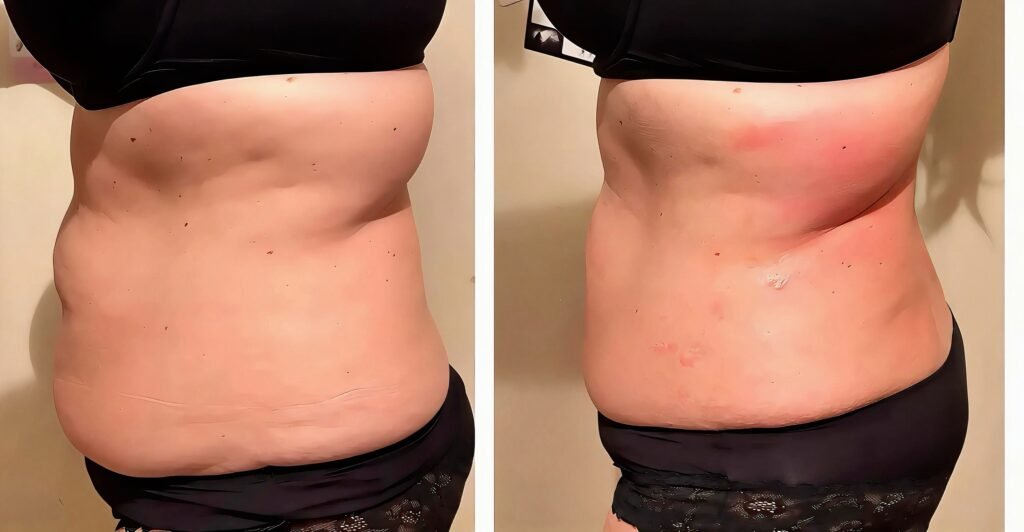
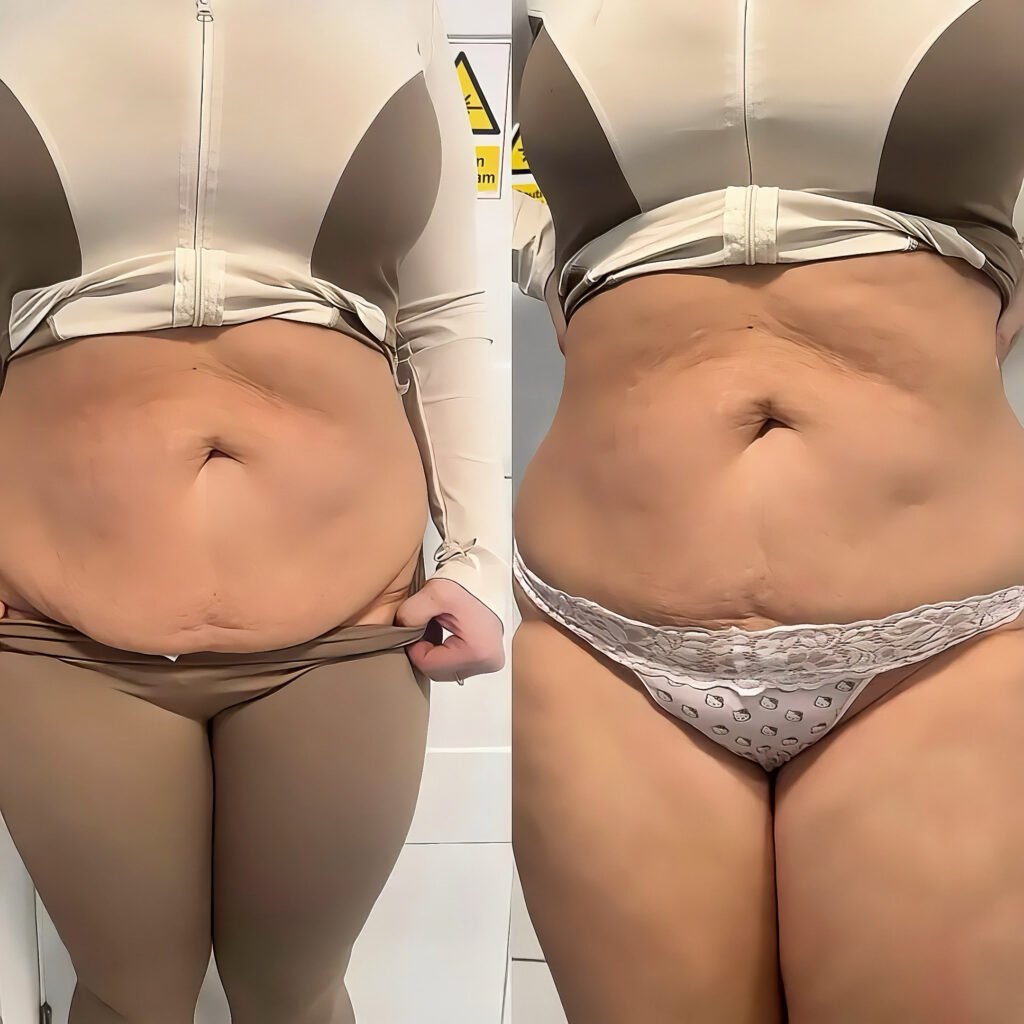
Results from our own clinic
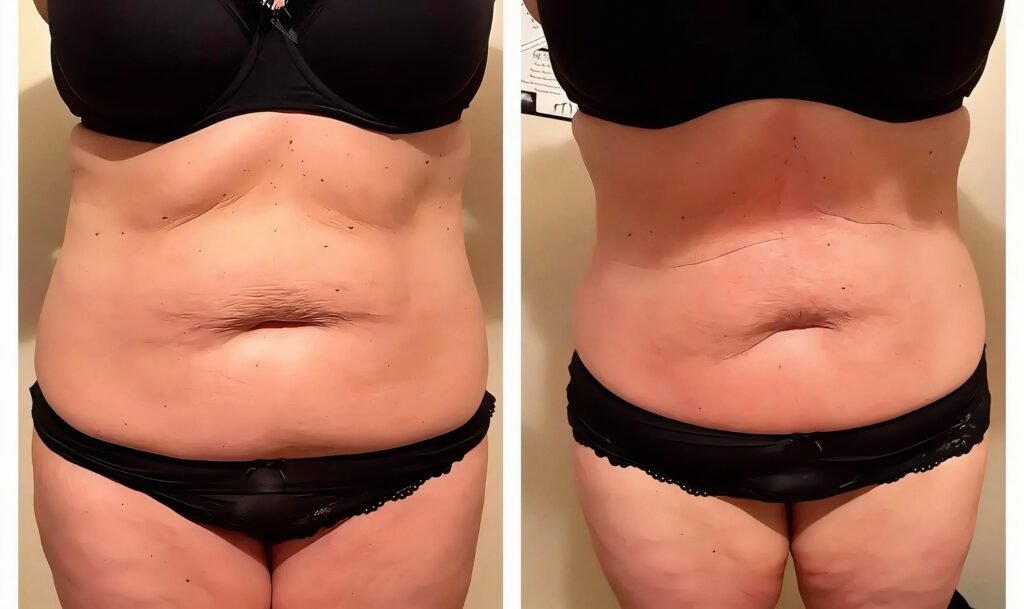
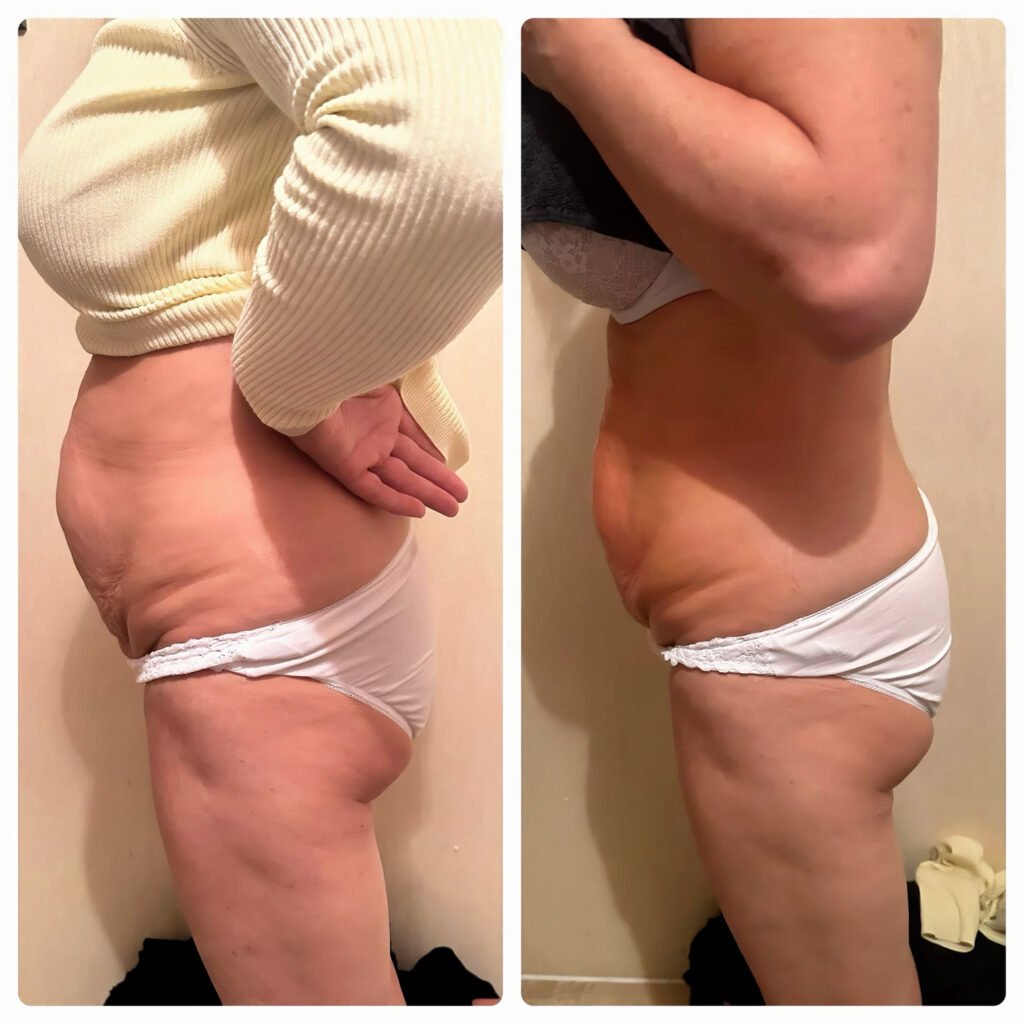
A genuine Skintastic client treated at our Southampton clinic, after ten sessions of laser lipo, ultrasound cavitation and radio frequency. Individual results vary and are not guaranteed.
Book your place
Places on the practical days are limited so that everyone gets proper hands on time with the models. Book online and your workbook goes out to you, then we will arrange your practical days.
Book your place, £499Message us on WhatsApp