
Laser lip neutralisation, Southampton
Laser Lip Neutralisation Southampton
Q-Switched Nd:YAG treatment for dark, uneven and hyperpigmented lips
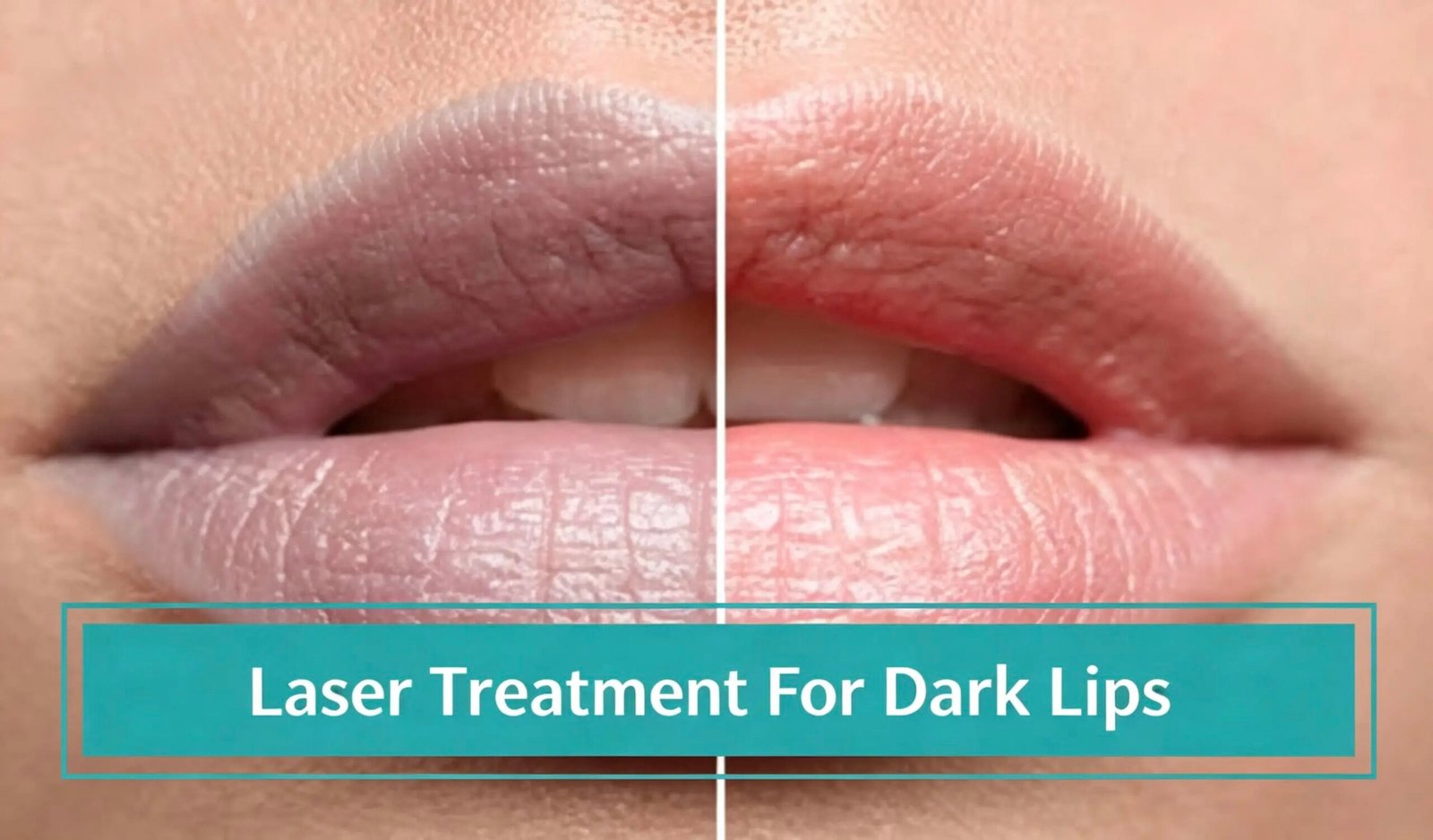
Are your lips naturally darker than you would like, uneven in colour, or noticeably more pigmented in certain areas? We offer Q-Switched Nd:YAG laser lip neutralisation for suitable adults. The aim is not to change your ethnicity or promise artificially pink lips. It is to reduce excess or uneven pigmentation and create a more balanced, natural-looking lip tone where treatment is appropriate.
- Q-Switched Nd:YAG
- MHRA-registered device
- Melanin-rich skin welcome
- Dark and uneven pigmentation
- Upper and lower lip
- Individual pigment assessment
- Mandatory patch testing
- Over 15 years’ laser experience
- Level 5 practitioner
- Clients aged 18+ only
From £49 per session
Consultation, pigmentation assessment and patch test – £10
- Over 15 years’ laser experience
- Level 5 qualified laser practitioner
- Advanced laser pigmentation knowledge
- UK Responsible Person, MHRA
- Medical-grade Q-Switched Nd:YAG
- Mandatory patch testing
This is pigment reduction, not lip bleaching. We do not promise to turn naturally brown lips pink. Every person’s natural lip tone is different, and our goal is a more even and balanced version of your own natural colour.
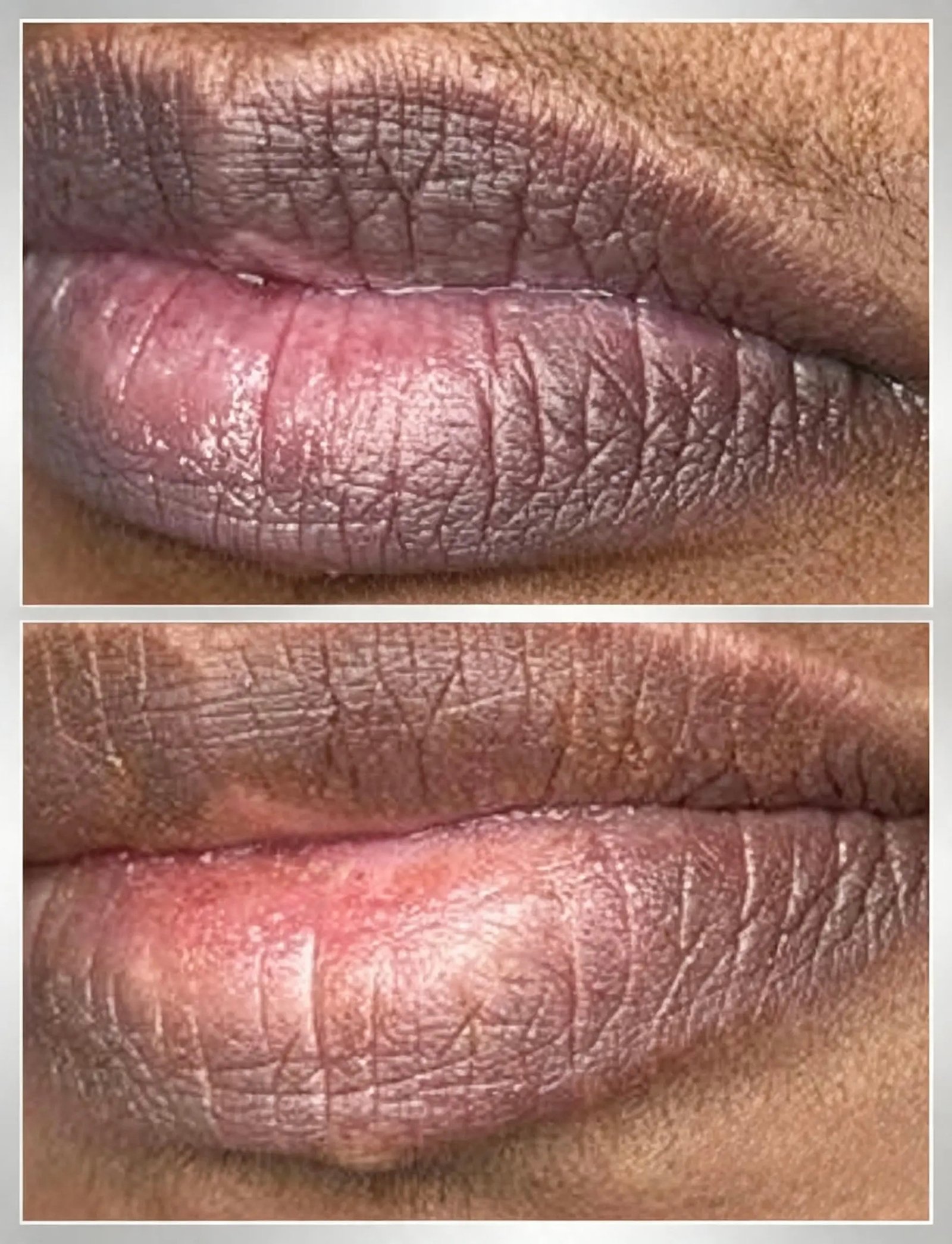
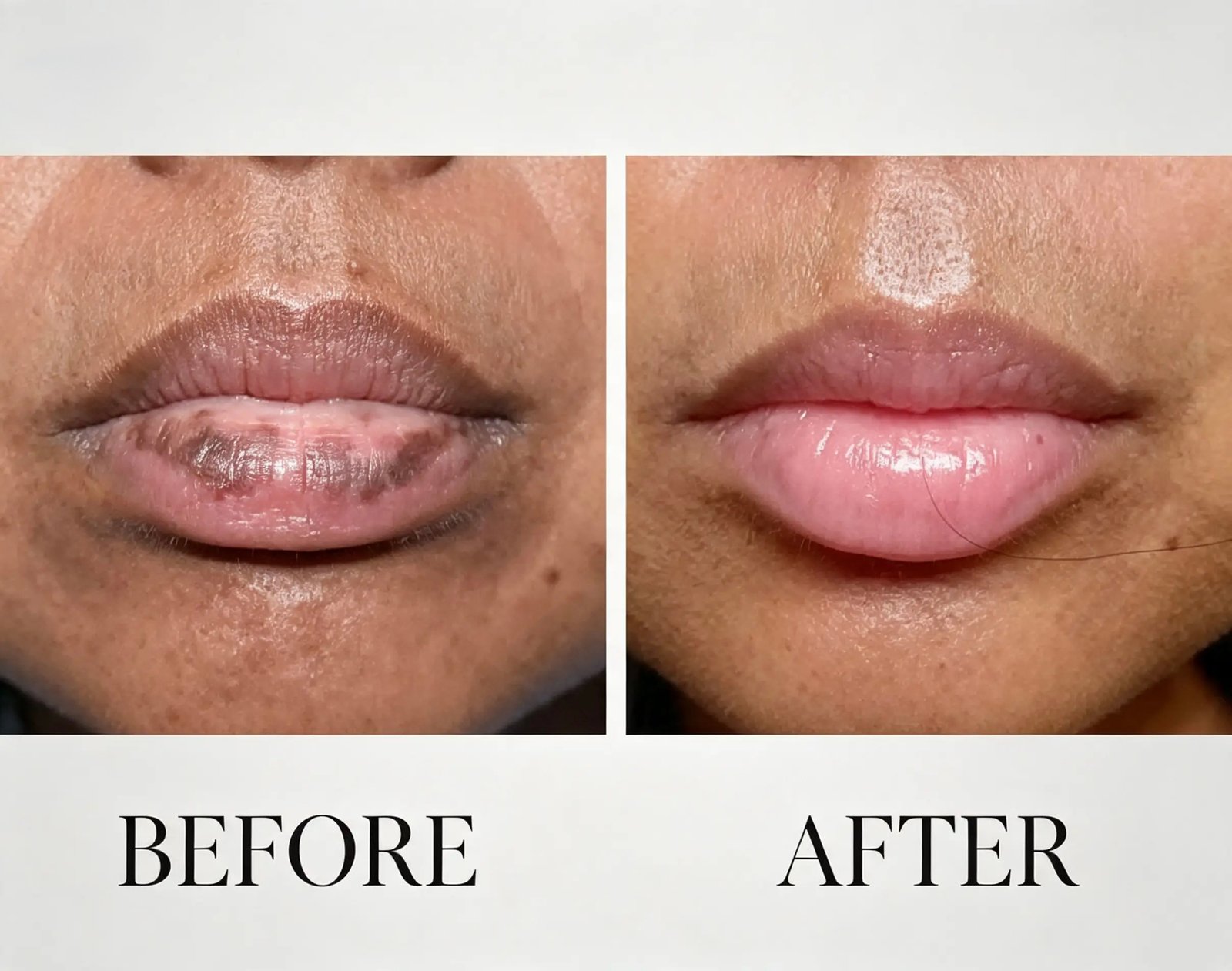
Results from our own clinic
Genuine Skintastic clients treated at our Southampton clinic. Individual results vary and are not guaranteed, and the number of sessions depends on your skin and the depth of the pigmentation.
What it is
What is laser lip neutralisation?
Lip pigmentation refers to increased melanin within the lips, which can make parts of the lips appear darker or more uneven in colour.
For some people this is completely natural and genetic. For others, pigmentation becomes more noticeable because of environmental, inflammatory, lifestyle or hormonal influences. Q-Switched Nd:YAG technology can be used in carefully selected clients to target excess melanin within suitable pigmentation, gradually reducing the appearance of unwanted pigment while preserving your natural lip colour.
What you may notice
Before offering laser treatment we first need to understand why the pigmentation is there. Not every dark area should automatically be treated with laser.
Prices
Laser lip neutralisation prices
Treatment courses are only recommended after your initial assessment and a satisfactory patch-test response. Please do not buy a long course before we have seen how your lips respond.
| Treatment | Price | Notes |
|---|---|---|
| Upper or lower lip only | £49 per session | Where pigmentation predominantly affects one lip |
| Full lips, upper and lower | £69 per session | Uneven or excessive pigmentation across both lips |
| Course of 3, full lips | £179 | Approximately £59.67 per session |
| Course of 5, full lips | £279 | Approximately £55.80 per session |
| Consultation, pigmentation assessment and patch test | £10 | Required before any treatment |
Your consultation includes
Melanin-rich skin
Experienced treatment for Black, Asian and mixed-heritage clients
SkinTastic welcomes clients of all skin tones. We are receiving increasing numbers of enquiries from Black, Asian, Middle Eastern and mixed-heritage clients seeking treatment for dark or uneven lip pigmentation.
Higher levels of natural melanin require a particularly careful approach. The challenge is to target unwanted pigmentation without unnecessarily disturbing your normal surrounding pigment.
Which is why treatment requires
- Individual skin assessment
- Pigmentation assessment
- Appropriate wavelength selection
- Conservative treatment planning
- Mandatory patch testing
- Careful monitoring of the treatment response
- Appropriate intervals between sessions
Your ethnicity alone does not determine your treatment settings. Your natural skin tone, Fitzpatrick type, lip colour, pigmentation pattern and individual response are all assessed. We recognise that many aesthetic treatments have historically been marketed using lighter skin as the reference point. Melanin-rich skin deserves proper consideration.
The technology
Why Q-Switched Nd:YAG?
Q-Switched Nd:YAG delivers very short pulses of laser energy which can interact with melanin within suitable pigmented areas. Our system provides two wavelengths.
1064nm
Penetrates more deeply and has comparatively lower absorption by epidermal melanin than shorter wavelengths. That can make it particularly valuable when considering pigmentation treatment in clients with more melanin-rich skin.
532nm
Absorbed strongly by superficial melanin and has been studied for lip pigmentation. However, stronger melanin absorption also means careful client selection is particularly important, especially in darker skin types.
What the published research shows
Q-Switched Nd:YAG treatment for hyperpigmented lips has been studied clinically, evaluating both 1064nm and 532nm. Results show that suitable clients can achieve improvement, but responses differ significantly between clients and between wavelengths. Some studies found stronger pigment reduction with 532nm, while lower-fluence 1064nm treatment produced fewer pigment-related adverse effects.
That difference is particularly relevant when treating clients with naturally higher levels of melanin, and it is why treatment must be individualised rather than applied from a standard setting.
Why we are cautious
Darker skin needs a different approach, not a stronger one
Darker skin contains more epidermal melanin. Melanin is also the target when treating pigmentation. The laser therefore has to distinguish between the pigmentation we want to reduce and your normal natural pigment.
If inappropriate parameters are used, complications may include
This is why lip pigmentation treatment should never simply be performed using aggressive pigmentation settings. It should never be approached as turning the laser up.
Our approach is conservative pigment reduction, not depigmentation. Attempting to remove too much natural pigment could produce uneven colour, hypopigmentation, mottling or an unnatural appearance.
Patch testing
Why a patch test is essential
Lip pigmentation treatment requires mandatory patch testing. This is particularly important in melanin-rich skin.
A patch test lets us observe
- How your pigment responds
- How your natural lip tissue responds
- Whether the area becomes darker
- Whether excessive inflammation occurs
- Whether unwanted pigment changes develop
- Whether treatment appears appropriate at all
We will not proceed to full treatment if the response suggests laser is unsuitable for you. If your patch-test response shows an unacceptable pigment reaction, we stop there.
Your course
How many treatments, and how often
Most suitable clients should expect a course rather than an instant one-treatment transformation. Approximately two to five treatments may be required. Some notice significant improvement after only a small number of sessions; others need a longer programme.
The number depends on
For many suitable clients, treatments may be performed approximately every four weeks. That gives the lips time to respond, settle, heal and show the true pigment response. Intervals are not identical for everyone and may be delayed according to skin response, lip healing, degree of inflammation, pigment response, practitioner assessment, manufacturer guidance and our treatment protocol.
We will not perform another treatment simply because four weeks have passed if your lips have not completely recovered. Results cannot be guaranteed.
Causes
What causes dark lip pigmentation?
Genetics
Some people naturally have more pigmentation within their lips. This is completely normal.
Skin tone
Melanin-rich skin frequently has naturally darker lips, or greater variation between the upper and lower lip.
UV exposure
Sun exposure can contribute to increased melanin production.
Smoking
Smoking can be associated with increased oral and lip pigmentation in some individuals.
Previous inflammation
Inflammation or irritation can sometimes leave residual pigmentation behind.
Lip products
Some clients experience irritation or pigmentation associated with repeated reactions to cosmetic products.
Hormonal and medical factors
Certain medical conditions, hormones and medications can influence pigmentation. If we believe your pigmentation requires medical investigation, we will recommend that before cosmetic laser treatment.
Expectations
Natural pigmentation is not the same as hyperpigmentation
There is an important difference between your natural, genetically determined lip colour and excess or acquired pigmentation.
Someone with naturally brown lips should not expect laser treatment to permanently convert their natural colour into a completely different one. The aim is to reduce suitable excess pigment or unevenness. A person may naturally have brown-toned lips but also have an excessively dark upper lip, patchy pigmentation, noticeably uneven colour or acquired darkening, and treatment may improve those differences while keeping a natural appearance.
Dark upper lip
It is common in melanin-rich skin for the upper lip to appear darker than the lower. Where appropriate, treatment may focus on the upper lip alone at £49 per session.
Two-tone lips
A noticeable difference in colour between parts of the lips: a dark upper with lighter lower, a dark border, patchy areas or uneven colour across the vermilion. The aim is a more balanced natural tone, not eliminating normal genetic variation.
Can laser make my lips pink?
We do not promise pink lips. Final lip colour is determined partly by genetics, natural melanin and the underlying tissue. Your result should still look like your natural lips.
A different treatment
Laser lip neutralisation is not the same as tattooed lip neutralisation
Laser lip neutralisation
Uses laser energy to target suitable existing melanin. No tattoo pigment is implanted into the lips. It removes rather than adds.
Lip blush and tattooed (PMU) lip neutralisation
Uses permanent-makeup techniques to implant corrective pigment into the lips. It changes the visible colour by adding pigment rather than reducing existing melanin.
Some clients prefer one approach over the other. We offer laser pigment reduction as a non-PMU option for suitable lip pigmentation.
What results can I expect?
- Reduction in darker areas
- More even lip tone
- Reduced contrast between upper and lower lips
- Improved appearance of patchy pigmentation
- Gradual brightening of excessive pigmentation
Results develop progressively and vary considerably. You should not expect the final result immediately after treatment. Pigmentation can also recur, particularly where the underlying trigger remains present, so some clients choose occasional maintenance treatment.
Safety first
When we will not treat
Knowing when not to laser pigmentation is extremely important. We may decline or postpone treatment where:
Focal or changing pigmentation
A single unusual dark area is different from widespread symmetrical lip pigmentation. We may recommend medical assessment if an area is new, changing, has irregular borders, contains several colours, is significantly darker than the surrounding pigment, bleeds, ulcerates, becomes painful or changes shape or size. Laser should never be used simply to remove the appearance of a lesion that first requires diagnosis.
Cold sores
Treatment is performed directly on or around an area where herpes simplex can occur. If you have a history of cold sores you must tell us at consultation, because laser and other lip procedures can potentially trigger a recurrence in susceptible people. We may recommend you discuss preventative management with a healthcare professional before treatment.
Your appointment
Consultation and treatment, step by step
Your first appointment is extremely important. We assess your natural lip colour, the distribution of pigmentation, the difference between upper and lower lip, your Fitzpatrick skin type, medical history, medication, history of cold sores, smoking, previous lip treatments, previous permanent makeup, recent pigmentation changes and your expectations. We will also tell you honestly whether we believe laser can realistically achieve the improvement you are looking for.
1
Lip assessment
Your lips are reassessed before every treatment, not only at the first.
2
Preparation
The area is carefully prepared according to the treatment protocol.
3
Laser safety
Appropriate laser safety procedures and protective eyewear are used.
4
Q-Switched treatment
Suitable pigmentation is treated using individually selected parameters according to your treatment plan.
5
Immediate assessment
The lip and pigment response are examined before you leave.
6
Aftercare
You receive detailed instructions for caring for the lips while they recover.
What to expect
How it feels, and what happens afterwards
Does it hurt?
The lips are sensitive. Most clients describe Q-Switched treatment as a series of quick hot flicks or sharp snapping sensations. The treatment area is small, so treatment itself is generally relatively quick. Individual sensitivity varies.
Straight afterwards
Temporary reactions can include redness, warmth, swelling, tenderness, temporary darkening, dryness, mild scaling and temporary colour changes. The appearance immediately after treatment is not the final result; pigmentation continues changing as the lips settle.
Can my lips get darker?
They can temporarily appear darker. Post-inflammatory pigmentation is also a recognised potential complication, particularly in melanin-rich skin, which is why conservative treatment, careful client selection and patch testing are essential.
Can parts become too light?
Hypopigmentation is a possible risk of any pigment-targeting laser treatment, meaning an area becomes lighter than the surrounding natural lip. That risk is precisely why we do not attempt aggressive bleaching or complete removal of natural lip melanin.
Aftercare
Caring for your lips, and protecting your result
After each treatment
- Keep the lips clean
- Avoid picking or peeling
- Do not deliberately remove dry skin
- Avoid irritating lip products
- Avoid excessive heat
- Avoid unnecessary sun exposure
- Follow the recommended lip protection
- Avoid smoking while the area is healing where possible
If you develop a reaction that concerns you, contact us.
Protecting your result
UV exposure stimulates melanin production, so protecting the lips from excessive sun is an important part of maintaining your result. Appropriate lip sun protection may be recommended throughout and after your course.
Smoking has been associated with increased oral and lip pigmentation. Laser may reduce suitable existing pigment, but continuing exposure to an underlying trigger can contribute to pigmentation returning. Reducing or stopping has wider health benefits beyond the appearance of your lips.
Why us
Why choose SkinTastic for laser lip neutralisation?
Pigmentation treatment in melanin-rich skin requires knowledge, caution and appropriate technology.
We do not treat clients according to ethnicity alone. We consider your natural skin tone, your Fitzpatrick skin type, your natural lip colour, your pigmentation, your medical history and your individual response before creating a treatment programme.
FAQ
Frequently asked questions
What is laser lip neutralisation?
A laser treatment designed to reduce suitable excess or uneven melanin pigmentation within the lips.
Do you treat Black skin?
Yes. We welcome clients with melanin-rich skin, including Black clients. Treatment is individually assessed and patch tested.
Do you treat Asian skin?
Yes. Suitable Asian skin types and lip pigmentation can be assessed individually.
Is this specifically for Black or Asian clients?
No. The treatment is available to suitable clients of any ethnicity. It is particularly relevant to many people with melanin-rich skin, but treatment decisions are based on the individual rather than ethnicity.
Will laser make my lips pink?
We do not promise to turn naturally pigmented lips pink. Our goal is to reduce suitable excess pigmentation and create a more even version of your natural lip tone.
How many treatments will I need?
Approximately two to five. Some clients need fewer and others may need more.
How often will I need treatment?
For many clients, approximately four weeks apart, subject to complete recovery, individual response, manufacturer guidance and practitioner assessment.
Will I see results after one treatment?
Some clients notice improvement after their first treatment, but a course is commonly required.
Can naturally dark lips be treated?
Potentially. We assess whether there is suitable excess or uneven pigmentation that can reasonably be targeted. We do not aim to remove all natural melanin from the lips.
Can you treat just my dark upper lip?
Yes, where suitable. Upper or lower lip only is £49 per session.
Can you treat two-tone lips?
Suitable uneven pigmentation may be treated following assessment and patch testing.
Does it work on smoking-related pigmentation?
Some suitable pigmentation may improve, but continued exposure to the underlying trigger can contribute to recurrence.
Is the treatment permanent?
Not necessarily. Pigmentation may return because of genetics, UV exposure, inflammation, smoking, hormonal influences or other factors.
Is this the same as lip blush?
No. Laser pigment reduction aims to reduce suitable existing melanin. Lip blush or dark-lip neutralisation implants cosmetic pigment into the lips.
Can dark skin develop PIH after treatment?
Yes. Post-inflammatory hyperpigmentation is a recognised risk and is particularly relevant in melanin-rich skin. This is one reason patch testing and conservative planning are essential.
Can the lips become too light?
Hypopigmentation is a potential risk of pigment-targeting laser procedures. We therefore aim for controlled reduction rather than aggressive depigmentation.
Why do I need a patch test?
It helps us evaluate how both your natural lip tissue and your pigmentation respond before treating the whole area.
Can I have this if I get cold sores?
You must tell us if you have a history of cold sores. Lip procedures can potentially trigger herpes simplex, and appropriate medical advice may be required before treatment.
Do you treat suspicious dark spots on the lips?
No. A new, changing or unusual focal pigmented lesion may require medical assessment before cosmetic laser treatment.
What age do I need to be?
You must be 18 or older. We cannot provide this treatment to clients under 18 due to our insurance requirements.
How much does it cost?
From £49 for one lip, £69 for upper and lower, £179 for a course of three and £279 for a course of five. Consultation and patch testing is £10.
Book your laser lip neutralisation consultation in Southampton
If dark or uneven lip pigmentation is affecting your confidence, the first step is understanding what type of pigmentation you have. We will assess your natural lip colour, skin tone, pigmentation pattern, medical history, medication, previous treatments and treatment goals before deciding whether Q-Switched laser treatment is appropriate.
Our goal is not to promise a completely different lip colour. It is to safely pursue a more even, balanced and natural-looking lip tone where appropriate. Black, Asian and melanin-rich skin welcome.
Consultation, pigmentation assessment and mandatory patch test – £10
SkinTastic Aesthetics Southampton
26 The Avenue
Southampton
SO17 1XL
Telephone: 02381 946394