
Non-ablative CO₂ skin rejuvenation, Southampton
Non-Ablative CO2 Skin Rejuvenation Southampton
Advanced 10,600nm CO2 skin rejuvenation with reduced downtime
Want fresher, smoother and more radiant-looking skin but are not ready for a full fractional CO2 resurfacing treatment? Using the dedicated non-ablative rejuvenation tip and protocol on our medical-grade 10,600nm CO2 laser, this treatment delivers controlled energy at a lower intensity than our micro-ablative and deeper fractional resurfacing. The aim is to stimulate a skin-remodelling response and improve the complexion while keeping downtime lower.
- Medical-grade 10,600nm CO2
- MHRA-registered device
- Dedicated non-ablative tip
- Lower downtime than fractional
- Collagen remodelling
- Face, neck and décolletage
- Individual parameters
- Over 15 years’ laser experience
- Level 5 practitioner
- Clients aged 18+ only
From £99 per treatment
Full consultation and skin assessment required before treatment
- Over 15 years’ laser experience
- Level 5 qualified laser practitioner
- Advanced CO2 laser training
- UK Responsible Person, MHRA
- Medical-grade 10,600nm CO2
- Class 4 laser safety controls
This is not a facial. It is a professional 10,600nm Class 4 medical-laser treatment requiring clinical assessment, laser safety controls, appropriate eye protection, trained operation, individual parameters and professional aftercare.
A result from our own clinic
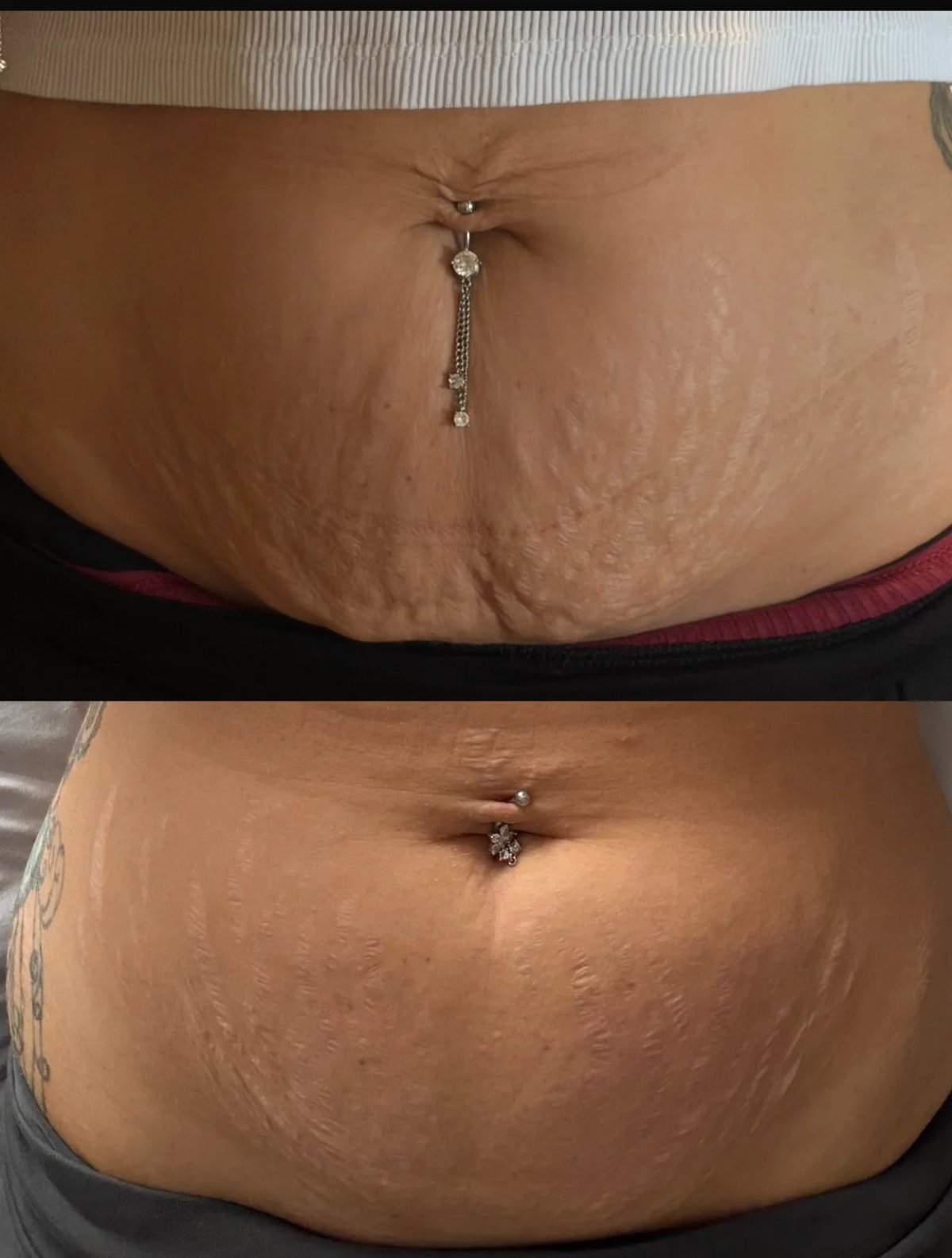
This photograph was taken at our Southampton clinic, of our own client, after a single CO2 session. It has not been retouched. How much change you see depends on your skin type, the area treated and how your skin heals, so this is one person’s outcome rather than a promise of yours. At consultation we will tell you honestly what is realistic for your skin, and how many sessions it is likely to take.
What it is
What is non-ablative CO2 skin rejuvenation?
Our CO2 laser operates at a wavelength of 10,600nm, which has a strong interaction with water contained within the skin.
Traditional fractional CO2 resurfacing uses controlled columns of laser energy to create a more intensive resurfacing and remodelling response. Our non-ablative protocol uses the dedicated rejuvenation tip and lower-intensity parameters to provide a gentler option, for clients who want collagen stimulation, rejuvenation, improved texture and a fresher complexion without choosing the stronger micro-ablative or fractional treatment.
It may suit clients concerned about
An important difference
Non-ablative and fractional are not the same treatment
We offer different levels of CO2 treatment depending on the concern being treated. You do not need to decide which before your consultation.
Non-ablative CO2 rejuvenation
- General rejuvenation
- Early fine lines
- Mild uneven texture
- Dull skin
- Early visible ageing
- Mild loss of firmness
- Clients wanting less downtime
Lower intensity, reduced downtime, usually performed as a course.
Micro-ablative and fractional CO2
- Deeper wrinkles
- Acne scarring
- More significant sun damage
- Textural irregularity
- More advanced resurfacing
- Selected scars
Higher intensity, stronger remodelling and therefore more downtime.
Your practitioner will assess skin texture, fine lines, pigmentation, scarring, laxity, previous treatments, your desired result and how much downtime you are comfortable with, then advise which level suits you.
Is stronger always better? No. The goal is not to use the highest possible setting. More aggressive treatment creates more inflammation, more downtime, greater healing demands and greater risk of complications. The treatment should fit the skin. The skin should never be forced to fit the treatment.
Prices
CO2 skin rejuvenation prices
| Treatment area | Per treatment | Course of 3 |
|---|---|---|
| Full face | £99 | £269 |
| Face and neck | £129 | £349 |
| Face, neck and décolletage | £159 | £429 |
Clients requiring more intensive treatment for deeper wrinkles, acne scarring, significant texture or more advanced sun damage can be assessed separately for our fractional and micro-ablative CO2 resurfacing, which involves different settings, recovery and pricing.
What it helps
What non-ablative CO2 rejuvenation can treat
Fine lines
As collagen production and remodelling decline with age, fine lines gradually become more visible. Treatment may help soften early lines across the forehead, cheeks, around the mouth, jawline, neck and décolletage.
Dull and tired skin
Designed to encourage a fresher appearance, brighter complexion, smoother texture and a more refined-looking skin surface.
Skin texture
Uneven texture can develop through ageing, environmental exposure, previous breakouts and loss of collagen. Controlled stimulation may improve mild textural irregularity.
Enlarged-looking pores
Pores cannot literally be permanently closed, but improving the quality and texture of surrounding skin may make them appear less noticeable. More significant irregularity may need a stronger treatment.
Mild skin laxity
Controlled thermal stimulation can support collagen-remodelling processes. For mild early laxity this may be a useful option; more significant laxity may need a different or combination approach.
Sun-damaged skin
Can form part of a programme for suitable sun-damaged skin. However, if pigmentation is your primary concern, IPL pigmentation treatment may sometimes be more appropriate.
You do not need to wait until you have deep wrinkles before considering professional rejuvenation. The goal here is gradual rejuvenation rather than aggressive resurfacing.
Your course
How many treatments, and how often
Because this is a lower-intensity protocol, it is generally performed as a course rather than expecting one treatment to achieve everything. For many clients approximately three treatments may be recommended initially, followed by review.
Some clients need fewer or more, depending on
Treatments are typically scheduled approximately every four to six weeks, giving the skin time to recover and allowing remodelling to develop. The exact interval depends on treatment intensity, skin response, area, healing, practitioner assessment, manufacturer guidance and your protocol. A repeat treatment is only performed once the skin has recovered appropriately.
The appointment provides the stimulus; the biological response continues afterwards. Collagen remodelling is not immediate and changes can continue developing for weeks, which is why the final result should not be judged on the day.
Your appointment
What happens during treatment
1
Consultation
We assess your skin, fine lines, texture, pigmentation, scarring, medical history, medication, previous aesthetic treatments, current skincare and desired outcome.
2
Skin preparation
The treatment area is thoroughly cleansed and prepared.
3
Protective eyewear
CO2 is a Class 4 medical laser. Appropriate 10,600nm eye protection and all required Laser Controlled Area safety procedures are used throughout.
4
Non-ablative treatment
The dedicated rejuvenation mode and tip are selected, and controlled energy is delivered systematically. Parameters follow skin type, area, skin thickness, treatment goal, previous response and practitioner assessment.
5
Skin assessment
Your practitioner continuously monitors the treatment response.
6
Cooling and aftercare
The skin is cooled or treated with appropriate post-laser skincare, and full aftercare instructions are provided before you leave.
What to expect
Comfort, downtime and results
Does it hurt?
Generally more comfortable than deeper fractional resurfacing. Clients describe warmth, heat, tingling or prickling. Sensitivity varies by area and individual, and your comfort is monitored throughout.
A lower-intensity protocol may not require the level of anaesthesia associated with deeper resurfacing. Do not apply numbing cream before attending unless specifically instructed to.
Afterwards
Immediately after, the skin may appear pink, red, warm, slightly swollen, sensitive or tight. The degree of redness depends on your skin and the treatment intensity.
Temporary reactions may include redness, warmth, mild sensitivity, tightness, mild dryness and slight flaking. Recovery is intended to be less intensive than traditional fractional resurfacing.
When will I see results?
Some clients notice fresher, brighter, smoother skin after the initial recovery period. The more important changes associated with collagen remodelling develop gradually and may continue over the following weeks and months.
Makeup
You should not immediately cover freshly treated skin with makeup. Your practitioner will tell you when it can safely be reapplied according to your skin response.
Skin type matters
Who we can and cannot treat with CO2
CO2 treatment requires careful skin selection. Our CO2 rejuvenation protocols are generally intended for suitable Fitzpatrick skin types I to IV, following individual assessment.
We do not routinely offer CO2 resurfacing or rejuvenation protocols to Fitzpatrick V to VI, because of the increased risk of unwanted pigmentary changes. Pigment changes are a recognised potential complication of laser treatment, and risk varies with Fitzpatrick type, natural melanin, treatment intensity, sun exposure, aftercare and individual healing.
Having darker skin does not mean rejuvenation is unavailable to you. It means the technology has to be chosen appropriately. Where CO2 is unsuitable under our protocols we can discuss professional microneedling, cold atmospheric plasma or other suitable rejuvenation treatments. The safest technology matters more than using a particular machine.
Treatment may also be unsuitable or postponed if you have
If you have a history of herpes simplex or cold sores you must tell us before facial CO2 treatment, because laser procedures can potentially trigger reactivation. Where appropriate we may recommend discussing preventative antiviral management with your GP or another prescribing clinician first. Treatment is available to clients aged 18 and over only.
Honest comparison
How it compares with our other treatments
Versus microneedling
Microneedling uses controlled mechanical micro-injury from sterile needles and may particularly suit acne scars, texture, fine lines and stretch marks. Non-ablative CO2 uses controlled 10,600nm energy and may particularly suit general photo-rejuvenation, early fine lines, mild texture, early visible ageing and collagen stimulation.
Versus IPL photo rejuvenation
IPL primarily targets colour irregularities such as sun pigmentation, age spots, mild vascular redness and uneven tone. CO2 rejuvenation primarily targets texture, fine lines, collagen stimulation, mild laxity and overall remodelling. Clients with both colour and texture concerns may have different treatments scheduled appropriately rather than performed together without assessment.
Versus full fractional CO2
Non-ablative is lower intensity with reduced downtime for general rejuvenation, fine lines, mild texture and early ageing. Fractional and micro-ablative is higher intensity with more downtime, for deeper wrinkles, acne scarring, significant texture and more advanced photodamage.
Does it treat acne scars or deep wrinkles?
For very mild texture a rejuvenation protocol may improve overall skin quality. But if acne scarring is your primary concern we would usually assess whether microneedling or fractional resurfacing would provide a more appropriate scar-remodelling treatment. Deeper wrinkles generally require a stronger protocol. We do not advertise gentle CO2 rejuvenation as a substitute for deeper scar treatment.
Before and after
Preparing, and protecting your result
Before your treatment
- Avoid deliberate tanning, sunbeds and fake tan
- Tell us about medication changes
- Tell us about prescription skincare
- Follow advice regarding retinoids and exfoliating acids
- Avoid deliberately irritating the skin
- Tell us about active cold sores
- Tell us about recent aesthetic procedures
Never discontinue prescribed medication without advice from the clinician who prescribed it.
After your treatment
- Keep your skin clean and avoid unnecessary touching
- Do not pick or scratch
- Avoid aggressive exfoliation, retinoids and acids until advised
- Avoid excessive heat, saunas and steam rooms initially
- Avoid swimming until advised
- Protect the skin carefully from UV and use SPF when advised
UV exposure contributes to photoageing, pigmentation, collagen degradation and uneven tone, and increases the risk of unwanted pigmentation after laser treatment. Broad-spectrum high-factor SPF should form part of your ongoing rejuvenation programme, not just the recovery period.
Why us
One CO2 laser, different levels of treatment
CO2 is one of the most powerful technologies used in professional resurfacing and rejuvenation. The ability to select the appropriate intensity is as important as the device itself.
Non-ablative rejuvenation
For fresher skin, early lines and mild texture.
Micro-ablative treatment
For stronger rejuvenation and more significant texture.
Fractional CO2 resurfacing
For selected deeper wrinkles, acne scarring and more advanced resurfacing.
FAQ
Frequently asked questions
What is non-ablative CO2 skin rejuvenation?
Our lower-intensity 10,600nm CO2 treatment using the manufacturer’s dedicated non-ablative rejuvenation tip and protocol, designed for general rejuvenation with less downtime than deeper fractional resurfacing.
Is it the same as fractional CO2?
No. Our stronger fractional and micro-ablative treatments create a more intensive resurfacing response. Non-ablative rejuvenation is intended to be gentler.
What does it treat?
Fine lines, mild uneven texture, dull skin, early signs of ageing, mild laxity and general rejuvenation.
How many treatments will I need?
Approximately three may initially be recommended. Your plan depends on your skin and goals.
How often can I have treatment?
For many clients approximately every four to six weeks, subject to complete recovery and practitioner assessment.
Does it stimulate collagen?
CO2 energy creates controlled thermal stimulation within the skin and is used to support collagen-remodelling processes.
Is there downtime?
Yes, although the aim of this protocol is less downtime than stronger fractional resurfacing. Temporary redness, warmth, tightness and mild dryness or flaking may occur.
Does it hurt?
Clients commonly describe warmth, heat or prickling. The sensation varies according to area and individual sensitivity.
Will I peel?
Mild dryness or flaking may occur. Recovery is generally intended to be less intensive than traditional fractional resurfacing.
Can I wear makeup afterwards?
Not immediately. Your practitioner will tell you when it can safely be reapplied.
Can it treat acne scars?
For mild texture it may improve overall skin quality. For significant scarring, microneedling or stronger fractional CO2 may be more appropriate.
Can it treat deep wrinkles?
Deeper wrinkles generally require a stronger approach than non-ablative rejuvenation.
Is CO2 suitable for darker skin?
It requires careful selection, because increased natural melanin raises the risk of post-inflammatory pigment changes. We generally restrict CO2 protocols to suitable Fitzpatrick I to IV clients following assessment.
Do you treat Fitzpatrick V or VI with CO2?
We do not routinely provide our CO2 protocols to Fitzpatrick V to VI clients. Alternative rejuvenation treatments can be discussed.
Can I have it if I get cold sores?
A history of cold sores must be disclosed. Facial laser procedures can potentially trigger reactivation, so medical advice about preventative treatment may be appropriate.
Is this an MHRA-registered device?
Yes. Treatments are performed using our medical-grade, MHRA-registered CO2 laser system.
What wavelength is the laser?
10,600nm.
How much is full face?
£99, or £269 for a course of three.
What age do I need to be?
You must be 18 or older. We cannot treat under-18s due to our insurance requirements.
Book your CO2 skin rejuvenation consultation in Southampton
If you want to improve fine lines, skin texture, dullness, early ageing, mild laxity or overall skin quality but do not feel ready for deeper fractional resurfacing, this treatment may suit you.
The first step is determining how much treatment your skin actually needs. We will assess your skin type, fine lines, texture, sun damage, pigmentation, medical history, previous treatments and your tolerance for downtime before recommending the appropriate CO2 level.
Full face £99. Course of three £269.
SkinTastic Aesthetics Southampton
26 The Avenue
Southampton
SO17 1XL
Telephone: 02381 946394